
a

Training & Resources

muddy puddle teacher logo

The Muddy Puddle Teacher ®

Leading with Outdoor Learning and Outdoor Play

Home 9 All Outdoor Learning Resources 9 Teaching social skills outdoors Intervention
Teaching social skills outdoors Intervention

Teaching social skills outdoors Intervention

Download

A Practical Intervention for SEND, Communication and Confidence

Looking for a simple way to teach social skills outdoors? This guide gives teachers, SENDCos, teaching assistants, nurture staff and pastoral teams practical outdoor learning ideas to support communication, turn-taking, friendship, confidence and emotional regulation.

Some children find social situations difficult. They may struggle to join in games, take turns, read body language, wait, share resources, cope with losing, manage conflict or know what to say to other children.

Teaching social skills outdoors can help because the learning becomes practical, playful and less pressured. Children can practise social communication through real shared tasks rather than sitting in a circle talking about what they should do.

The outdoors gives children space to move, connect, practise and try again. Explore our Beginners Guide to Outdoor Learning for SEND to get some instant, use today ideas! 


Quick Answer: How Can Outdoor Learning Support Social Skills?

Outdoor learning can support social skills by giving children real opportunities to practise communication, turn-taking, cooperation, listening, problem-solving and friendship in a practical setting.

Outdoor social skills interventions can help children:

  • practise taking turns

  • share equipment

  • communicate with peers

  • listen to instructions

  • work as part of a team

  • understand personal space

  • build confidence

  • manage small disagreements

  • cope with waiting

  • experience positive peer interaction

For many children, social skills are easier to learn when they are linked to something active and meaningful.

Instead of saying, “You need to share,” children can practise sharing by carrying sticks together, building a den, watering plants, collecting leaves or completing a simple team challenge. For more SEND Outdoor Resources, head to the Outdoor SEND Hub. 


New to Teaching Social Skills Outdoors? Start Here

If teaching social skills outdoors feels overwhelming, start with one tiny target.

Do not try to teach every social skill at once.

Choose one focus, such as:

  • taking turns

  • asking for help

  • waiting

  • sharing

  • listening

  • joining in

  • using kind words

  • solving a problem together

Then choose one repeated outdoor activity that lets children practise that skill.

For example:

Target: Taking turns
Outdoor activity: Passing a watering can and each child waters one plant
Adult language: “My turn. Your turn. Waiting turn.”

The power is in repetition.

Children with SEND often need many calm opportunities to practise the same social skill in real contexts.


Try This Tomorrow: The Turn-Taking Watering Job

If you only try one outdoor social skills intervention, try this.

The Turn-Taking Watering Job

Time: 10 minutes
Prep: Low
Resources: Small watering can, plants, visual turn-taking card if needed
Learning links: PSHE, communication, nurture, science, responsibility
SEND focus: Turn-taking, waiting, sharing, language, confidence

Choose a pair or small group of children.

Give them one shared watering can.

Use a simple structure:

  1. Child 1 fills the watering can.

  2. Child 1 waters one plant.

  3. Child 1 passes the watering can.

  4. Child 2 waters one plant.

  5. Child 2 passes it on.

Use repeated adult language:

  • “My turn.”

  • “Your turn.”

  • “Waiting.”

  • “Pass it to…”

  • “Thank you.”

  • “You waited.”

  • “Now it is your turn.”

Why this works

This activity gives children a real reason to take turns. They are not just practising a social skill in theory. They are using the skill to complete a purposeful outdoor job.

It works well because it is calm, predictable and short. The adult can model the language, praise the skill and support children before frustration builds.  Gain some instant ideas you can use today, explore 100 Ready-to-use Outdoor Learning Ideas. 

Top 100 Outdoor Learning Activities


Why Teach Social Skills Outdoors?

Social skills are not always learned through talking. Many children need to experience social situations, practise them repeatedly and feel supported by an adult who can model the language in the moment.

The outdoors can support this because it offers:

  • more space

  • less pressure

  • practical shared tasks

  • movement

  • natural reasons to communicate

  • opportunities for side-by-side play

  • calmer ways to practise friendship

  • real-life problem-solving

For children with SEND, nurture needs, autism, ADHD, SEMH or speech and language needs, outdoor social skills work can feel more accessible than formal classroom-based intervention.

A child may not be ready to discuss friendship on a worksheet, but they may be ready to build something with a partner.

That is social learning, too. Take a 60-day free trial to download resources now. 


What Social Skills Can Be Taught Outdoors?

Outdoor learning can support many social skills, including:

  • taking turns

  • sharing

  • waiting

  • listening

  • asking for help

  • asking to join in

  • using names

  • giving compliments

  • solving problems

  • following group rules

  • understanding personal space

  • working with a partner

  • coping when things change

  • repairing after conflict

The key is to choose one social skill at a time and make it visible.

For example:

Today we are practising waiting.
Today we are practising asking for a turn.
Today we are practising working together.

Children need to know what the social skill is, what it looks like and when they have done it successfully. For more SEND Outdoor Resources, head to the Outdoor SEND Hub. 


Outdoor Social Skills Intervention Idea 1: Partner Build

Partner Build is a simple outdoor intervention where two children work together to build something using natural or loose parts.

How It Works

Give two children a small shared task.

For example:

  • build a home for a toy animal

  • build a bridge with sticks

  • make a leaf picture together

  • create a small bug hotel

  • build a tower with stones

  • make a road using sticks and cones

Give each child a clear role.

Example:

Child 1: Collects sticks
Child 2: Places sticks
Then swap roles.

Use simple adult prompts:

  • “Ask your partner.”

  • “Can I have a stick, please?”

  • “Where shall we put it?”

  • “Let’s do it together.”

  • “Your idea, then my idea.”

  • “We are working as a team.”

Social Skills Targeted

Partner Build can support:

  • cooperation

  • turn-taking

  • communication

  • listening

  • sharing ideas

  • problem-solving

  • flexible thinking

  • confidence with peers

Why It Works

Some children find direct social conversation difficult. Building side by side can feel easier than sitting face to face.

The shared task gives children something to focus on. This reduces pressure and creates natural moments for communication.

Adult Role

The adult should not take over the task. Their role is to model the social language and notice positive moments.

Say:

  • “You gave your partner a turn.”

  • “You listened to their idea.”

  • “You waited.”

  • “You asked with kind words.”

  • “You solved that together.”

This helps children understand exactly what they did well. Take a 60-day free trial to download resources now. 


Outdoor Social Skills Intervention Idea 2: The Friendship Trail

The Friendship Trail is a short outdoor route with simple social skill stops. It works well for nurture groups, SEND support, pastoral sessions or small group interventions.

How It Works

Create a short route using cones, hoops, chalk circles or natural landmarks.

At each stop, children practise one simple social skill.

Example trail:

Stop 1: Greeting

Children practise saying hello, waving or using a communication card.

Prompt:

“Say hello in a way that feels comfortable.”

Stop 2: Turn-Taking

Children take turns placing a leaf, stone or stick into a hoop.

Prompt:

“Wait. Watch. Your turn.”

Stop 3: Listening

One child chooses an object and the other child listens to one thing about it.

Prompt:

“Look. Listen. Then respond.”

Stop 4: Kind Words

Children practise giving a simple compliment or positive comment.

Prompt:

“I like your…”
“Thank you for…”
“You were good at…”

Stop 5: Team Finish

Children complete one tiny team task, such as carrying a basket together or building one shared shape.

Prompt:

“We finished together.”

Social Skills Targeted

The Friendship Trail can support:

  • greetings

  • turn-taking

  • waiting

  • listening

  • kind words

  • teamwork

  • confidence

  • positive peer interaction

Why It Works

The trail gives structure to social learning. Children know what is coming next, and each skill is practised in a short, manageable way.

This can be especially helpful for children who become overwhelmed by open-ended play or unstructured social time.

Take a 60-day free trial to download resources now. 


How to Make Outdoor Social Skills Work for SEND

Outdoor social skills interventions work best when they are clear, short and repeated.

Keep the Group Small

Start with pairs or groups of three. Large groups can be too socially demanding for some children.

Teach One Skill at a Time

Focus on one target skill rather than expecting children to manage everything at once.

Use Visuals

Use simple cards such as:

  • my turn

  • your turn

  • wait

  • help

  • stop

  • ask

  • listen

  • kind words

Model the Words

Children may need to hear the exact language.

For example:

“Can I have a turn?”
“Can I join in?”
“Help, please.”
“Let’s do it together.”
“I don’t like that.”
“Stop, please.”

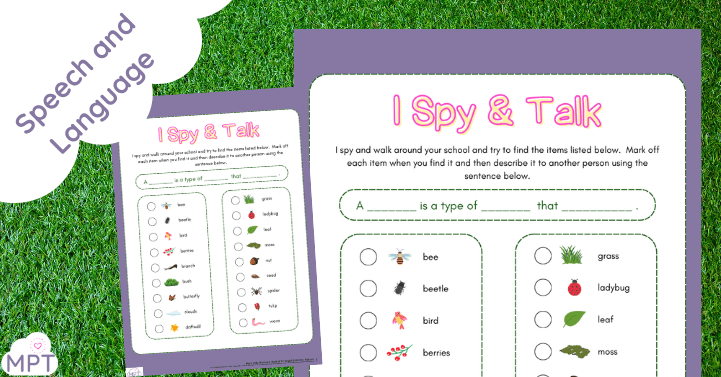
For a simple activity to get started with this, try this I Spy Lesson Idea for SEND. 

Outdoor Learning I Spy & Talk


Praise the Skill, Not Just the Behaviour

Instead of only saying “good boy” or “well done,” name the skill.

Say:

  • “You waited for your turn.”

  • “You asked kindly.”

  • “You listened to your partner.”

  • “You shared the sticks.”

  • “You solved the problem together.”

This helps children understand what to repeat next time.


A Simple Outdoor Social Skills Intervention Structure

Use this structure once or twice a week.

1. Choose One Skill

Example: taking turns.

2. Show the Skill

Model what it looks like.

3. Practise Outdoors

Use a practical activity such as watering, building or collecting.

4. Name the Skill During the Activity

“You are waiting.”
“You are sharing.”
“You are listening.”

5. Finish Calmly

End with one positive reflection.

Example:

“Today we practised taking turns. You waited and then had your turn.”

6. Repeat Next Week

Use the same structure again so children can practise the skill more than once. For more SEND Outdoor Resources, head to the Outdoor SEND Hub. 


Who Can Benefit from Outdoor Social Skills Interventions?

Outdoor social skills interventions can support children who:

  • find friendships difficult

  • struggle with turn-taking

  • become anxious in groups

  • find playtime difficult

  • need support with communication

  • have autism

  • have ADHD

  • have speech and language needs

  • have SEMH needs

  • struggle with conflict

  • need nurture group support

  • find classroom-based interventions too formal

This approach can work across EYFS, KS1, KS2 and SEND settings.


If your class likes to play, explore some of our Let’s Play Outdoors Resources, such as this Superhero Play Pack. 

Outdoor Play: Superhero Activities EYFS


Want Ready-to-Teach Outdoor Learning and SEND Resources?

The Muddy Puddle Teacher Club helps busy teachers save planning time with ready-to-use outdoor learning resources, SEND ideas and nurture-friendly activities.

Inside the club, you can find support for:

  • outdoor learning for SEND

  • nurture group activities

  • outdoor social skills ideas

  • communication activities

  • regulation routines

  • outdoor phonics and maths

  • EYFS outdoor provision

  • KS1 and KS2 outdoor learning

  • simple curriculum-linked activities you can use straight away

You can take a 60-day free trial and start today.

This is ideal if you want outdoor learning to feel simple, purposeful and inclusive without spending hours planning from scratch.


FAQs About Teaching Social Skills Outdoors

How can outdoor learning support social skills?

Outdoor learning supports social skills by giving children real opportunities to practise turn-taking, sharing, listening, teamwork, communication and problem-solving through practical activities.

What are good outdoor social skills activities?

Good outdoor social skills activities include partner building tasks, turn-taking watering jobs, friendship trails, shared nature hunts and simple team challenges. The best activities are short, structured and focused on one skill at a time. Take a 60-day free trial to download resources now. 

Can outdoor learning help children with SEND develop friendships?

Yes, outdoor learning can help SEND children develop friendships by giving them lower-pressure ways to connect with peers. Side-by-side outdoor tasks can feel easier than formal conversation or unstructured play.

How do you teach turn-taking outdoors?

Teach turn-taking outdoors by using shared equipment such as a watering can, basket, hoop or set of natural objects. Use clear language such as “my turn,” “your turn” and “waiting,” and praise the child when they take turns successfully.

How do you support autistic children with social skills outdoors?

Support autistic children by using predictable routines, visual prompts, small groups, clear roles and low-pressure activities. Avoid forcing eye contact or long conversations. Focus on practical shared tasks.

How often should social skills interventions happen?

Little and often works best. A short 10 to 15-minute outdoor social skills session once or twice a week can be very effective when the same skills are repeated and reinforced.

What resources do I need?

You only need simple resources such as hoops, cones, chalk, visual cards, watering cans, baskets, sticks, stones, leaves and small world toys. For more SEND Outdoor Resources, head to the Outdoor SEND Hub. 

Can this be used as a nurture group intervention?

Yes, teaching social skills outdoors works very well as a nurture group intervention because it supports connection, confidence, communication and emotional safety through practical shared experiences.


Ready for More Outdoor Learning and SEND Ideas?

If you want social skills, nurture and SEND support to feel more practical and less worksheet-based, join The Muddy Puddle Teacher Club.

You will find ready-to-use outdoor learning ideas, SEND-friendly resources, nurture activities and curriculum-linked planning to help children learn through movement, nature, talk and play.

Take a 60-day free trial to download resources today and begin with one simple outdoor social skills activity this week.

You need a subscription to download this file. Log in/Upgrade or Take a 60 Day Free Trial. Feel free to Send us a message if you need help.

New in