
a

Training & Resources

muddy puddle teacher logo

The Muddy Puddle Teacher ®

Leading with Outdoor Learning and Outdoor Play

Home 9 All Outdoor Learning Resources 9 Outdoor SEND Care Plan
Outdoor SEND Care Plan

Outdoor SEND Care Plan

Download

How to Use Outdoor Learning to Support Regulation, Access and Inclusion


Looking for a simple way to create an outdoor SEND care plan? This guide helps teachers, SENDCos, teaching assistants and school staff plan outdoor learning that supports regulation, sensory needs, communication, movement, behaviour and curriculum access. New to this?  Read our Beginners Guide to Outdoor SEND Ideas and Activities. 

An outdoor SEND care plan does not need to be complicated. It is simply a clear plan that helps staff understand how a child can access outdoor learning safely, calmly and successfully.

For some children, the outdoors can be a place of freedom, movement and confidence. For others, it can feel noisy, unpredictable or overwhelming. A care plan helps make outdoor learning inclusive, purposeful and supportive.

The goal is not to make every child do the same thing outside. The goal is to help every child access learning in a way that works for them. Take a 60-day free trial to download resources now. 


Quick Answer: What Is an Outdoor SEND Care Plan?

An outdoor SEND care plan is a simple support plan that explains how a child’s needs will be met during outdoor learning. It may include information about sensory needs, regulation strategies, communication support, movement needs, safe spaces, adult support, transitions and any adaptations needed outside.

An outdoor SEND care plan can help staff understand:

  • what helps the child feel safe outdoors

  • what might overwhelm the child

  • how the child communicates discomfort

  • what regulation strategies work

  • what adaptations are needed

  • what equipment may help

  • how to support transitions outside and back inside

  • what the child enjoys outdoors

  • how to help the child access learning successfully

It gives staff confidence and helps children feel understood.

We have lots of idea packs for dysregulated children and ideas to do this outdoors – Top 10 ways to support Rysregulated Children Outdoors. 

10 Outdoor Ideas for Dysregulated Children


New to Outdoor SEND Care Plans? Start Here

If writing an outdoor SEND care plan feels overwhelming, start with three questions. Take a 60-day free trial to download resources now. 

  1. What helps this child feel calm and safe outdoors?

  2. What makes outdoor learning difficult for this child?

  3. What small adjustments would help them join in?

You do not need a long document. A one-page plan can be enough.

The most useful outdoor SEND care plans are:

  • simple

  • practical

  • easy for staff to read

  • focused on the child

  • updated regularly

  • linked to real outdoor routines

  • shared with everyone supporting the child

A care plan should not sit in a folder and never be used. It should help staff make better decisions in the moment.


Try This Tomorrow: The Outdoor Support Snapshot

If you only do one thing, create an outdoor support snapshot for one child.

Outdoor Support Snapshot

Time: 10 minutes
Prep: Low
Resources: Paper, digital template or SEND notes
Purpose: To help staff quickly understand how to support the child outside
SEND focus: Regulation, safety, access, inclusion

Write down:

  1. What the child enjoys outdoors

  2. What the child finds difficult outdoors

  3. What helps the child regulate

  4. What adults should say or do

  5. What adults should avoid

Example:

Child enjoys: collecting sticks, watering plants, quiet walks
Finds difficult: noisy playtimes, sudden changes, mud on hands
Helps: gloves, first/then card, calm adult, same route
Adults should: use short instructions and offer choices
Avoid: rushing, shouting across the playground, surprise changes

Why this works

This gives staff a clear, practical starting point. It moves the conversation from “They don’t cope outside” to “What support helps them cope outside?”

That shift matters.

Looking for daily ideas to help keep your children regulated? Discover 10 ways to use the outdoors to keep children regulated. 

10 Outdoor Tips Using Nature to Keep Children Regulated


Why Outdoor SEND Care Plans Matter

Outdoor learning can be brilliant for SEND, but only when it is planned with the child in mind. Take a 60-day free trial to download resources now. 

Children may have needs linked to:

  • autism

  • ADHD

  • dyslexia

  • dyspraxia

  • speech and language

  • anxiety

  • SEMH

  • sensory processing

  • trauma

  • physical needs

  • communication needs

  • medical needs

Without a plan, outdoor learning can become inconsistent. One adult may know what helps, but another may not. One session may feel successful, while the next feels chaotic.

An outdoor SEND care plan helps create consistency.

It tells adults:

  • how to prepare the child

  • how to support them during the session

  • how to help them regulate

  • how to adapt the task

  • how to support the transition back inside

This can reduce anxiety for the child and the adults. For more ideas head to the Outdoor Ideas for SEND Hub. 


What Should Be Included in an Outdoor SEND Care Plan?

A useful outdoor SEND care plan may include:

1. Child’s Strengths Outdoors

Start with what works.

For example:

  • enjoys collecting natural objects

  • likes watering plants

  • responds well to movement

  • enjoys quiet spaces

  • likes being a helper

  • communicates well through objects

  • enjoys building and sorting

This keeps the plan positive and child-centred.

2. Possible Barriers Outdoors

Identify what may be difficult.

For example:

  • loud playground noise

  • unexpected changes

  • wet or muddy textures

  • crowded spaces

  • running games

  • transitions back inside

  • long verbal instructions

  • waiting

  • wind, rain or bright light

This helps staff plan ahead.

3. Regulation Strategies

Include what helps the child calm or stay regulated.

For example:

  • short sensory walk

  • breathing by a tree

  • carrying a small bucket

  • watering plants

  • quiet bench

  • gloves

  • ear defenders

  • first/then card

  • same route each time

4. Communication Support

Explain how the child communicates and what helps.

For example:

  • uses gestures

  • points to objects

  • needs processing time

  • benefits from visuals

  • uses now/next language

  • finds open questions difficult

  • needs simple choices

5. Safety and Supervision

Include any key safety notes.

For example:

  • needs adult close by near gates

  • may run if overwhelmed

  • needs clear boundaries

  • benefits from a marked area

  • needs support with tools

  • needs warning before transitions

6. Outdoor Learning Adaptations

Explain how learning can be made accessible.

For example:

  • use large-scale resources

  • offer movement choices

  • reduce writing demands

  • use natural objects

  • model first

  • give one instruction at a time

  • allow non-verbal responses

  • use repeated routines

For more ideas head to the Outdoor Ideas for SEND Hub. 


Outdoor SEND Care Plan Idea 1: The Regulation Route

A regulation route is a repeated outdoor walk or movement pathway that helps a child calm, reset and prepare for learning.

It can be used:

  • at the start of the day

  • before a difficult lesson

  • after playtime

  • after conflict

  • during transition

  • before returning indoors

How to Create a Regulation Route

Choose a short, safe route around school. Take a 60-day free trial to download resources now. 

For example:

  1. Start at the classroom door

  2. Walk to the tree

  3. Stop and breathe

  4. Walk to the planter

  5. Water one plant

  6. Walk back to class

Use the same route each time.

Keep the language simple:

“First walk.
Then breathe.
Then water.
Then back to class.”

Why It Supports SEND

A regulation route supports children who need movement, predictability and sensory grounding.

It may help children who:

  • feel anxious

  • struggle after playtime

  • find transitions hard

  • need movement before learning

  • become overwhelmed indoors

  • need a calm adult connection

The key is repetition. The child begins to learn:

“This route helps my body get ready.”

What to Add to the Care Plan

In the outdoor SEND care plan, write:

  • when the child can use the route

  • which adult supports it

  • where the route starts and ends

  • what language adults should use

  • what signs show the child needs it

  • how long it should last

  • how the child returns to learning

Example wording:

“When the child is becoming overwhelmed, offer the regulation route. Use calm, short language. Walk to the tree, take three breaths, water the planter and return to class. Avoid asking lots of questions during the route. Reflect later when calm.”


Outdoor SEND Care Plan Idea 2: The Access Basket

An access basket is a small set of outdoor resources that helps the child take part in learning successfully.

It is not a reward box. It is an inclusion tool.

What to Put in an Access Basket

Choose resources based on the child’s needs.

Examples:

  • gloves

  • ear defenders

  • visual cards

  • first/then card

  • chalk

  • small whiteboard

  • natural object tray

  • communication symbols

  • timer

  • magnifier

  • soft ball

  • sensory object

  • pencil grip

  • clipboard

  • feelings cards

Keep it simple. Too much choice can be overwhelming.

How to Use It

Before outdoor learning, the adult checks the basket and chooses what the child may need.

For example:

  • gloves if the child dislikes mud

  • visual cards if the child struggles with instructions

  • timer if the child needs to know when the session ends

  • chalk if writing in a book is difficult

  • communication cards if speaking is hard

  • sensory object if the child needs grounding

Why It Supports SEND

An access basket helps remove barriers before they become problems.

It may support children who:

  • have sensory sensitivities

  • struggle with communication

  • need visual prompts

  • find writing difficult

  • become anxious with uncertainty

  • need support to stay engaged

The access basket tells the child:

“We have thought about what you need.”

That can be very reassuring.

What to Add to the Care Plan

In the outdoor SEND care plan, write:

  • what should be in the basket

  • when it should be used

  • who prepares it

  • which items the child can choose

  • which items are essential

  • where the basket is kept

Example wording:

“The child should have access to the outdoor SEND basket during outdoor learning. Include gloves, first/then card, visual instruction cards and chalk. Offer these before the session begins. Do not wait until the child is already distressed.”


How to Use an Outdoor SEND Care Plan in School

An outdoor SEND care plan works best when it is shared and used by everyone.

Make sure it is available to:

  • class teachers

  • teaching assistants

  • SENDCo

  • lunchtime staff

  • supply staff

  • pastoral staff

  • outdoor learning leads

  • after-school club staff

The plan should be short enough for staff to read quickly.

A simple one-page format often works best.


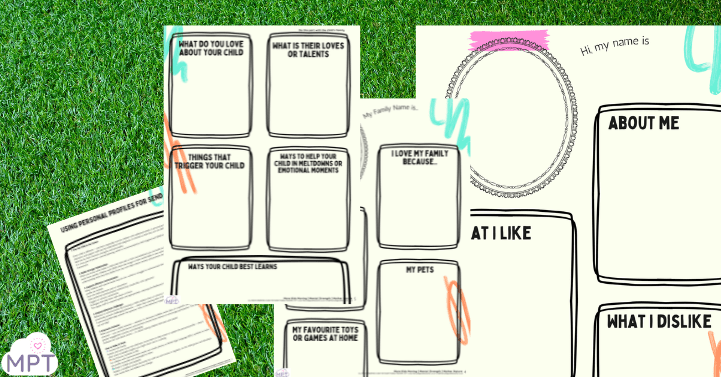
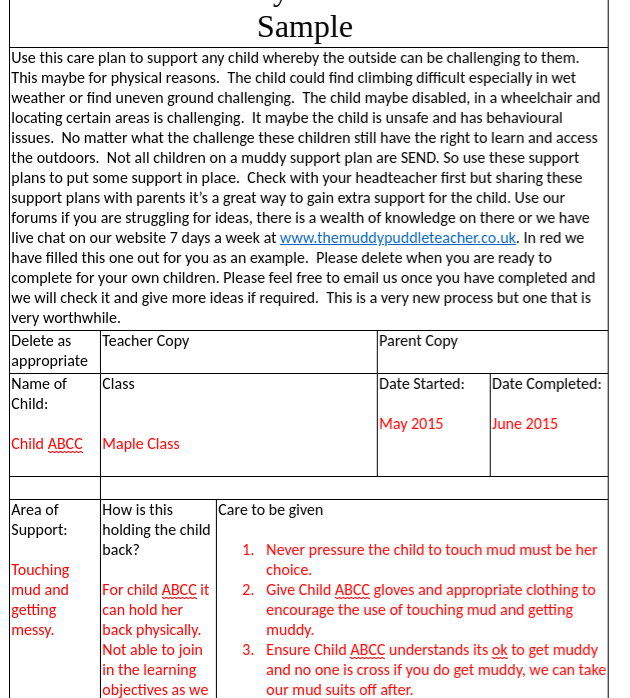
Outdoor SEND Care Plan Template

Use this structure:

Child’s Name:

Year Group:

Key Outdoor Strengths:

What does the child enjoy or do well outside?

Outdoor Triggers or Barriers:

What may make outdoor learning difficult?

Regulation Strategies:

What helps the child calm, focus or reset?

Communication Support:

How does the child communicate? What helps them understand?

Sensory Needs:

What does the child seek or avoid outdoors?

Transition Support:

How should adults support going outside and coming back in?

Safety Notes:

What do staff need to know?

Outdoor Learning Adaptations:

How can activities be adjusted?

Resources Needed:

What should be prepared?

Adult Language That Helps:

What phrases work well?

Adult Responses to Avoid:

What makes things worse?

Review Date:

When will the plan be checked?


Example Outdoor SEND Care Plan Wording

Here is an example of how a section might read:

“The child enjoys being outdoors when the routine is predictable. They respond well to quiet walking, collecting natural objects and watering plants. They may become overwhelmed by loud noise, unexpected changes and busy playground spaces. Before outdoor learning, show the first/then card and explain the route. Offer gloves if touching natural materials. Use short instructions and give processing time. If the child becomes dysregulated, offer the regulation route rather than asking lots of questions. Reflect once calm.”


Making Outdoor Learning Inclusive Through Care Planning

A good outdoor SEND care plan does not lower expectations. It removes barriers. Take a 60-day free trial to download resources now. 

It helps children access:

  • outdoor maths

  • outdoor literacy

  • phonics outdoors

  • science investigations

  • sensory learning

  • nurture groups

  • regulation activities

  • physical development

  • PSHE

  • creative outdoor tasks

The plan should help adults think:

“How can this child join in successfully?”

rather than:

“They can’t do outdoor learning.”

For more ideas head to the Outdoor Ideas for SEND Hub. 


Want Ready-to-Teach Outdoor Learning and SEND Resources?

The Muddy Puddle Teacher Club helps busy teachers save planning time with ready-to-use outdoor learning resources, SEND ideas and inclusive activities.

Inside the club, you can find support for:

  • outdoor learning for SEND

  • regulation routines

  • nurture group ideas

  • outdoor phonics and maths

  • sensory outdoor learning

  • EYFS outdoor provision

  • KS1 and KS2 outdoor ideas

  • simple curriculum-linked activities

  • practical ideas you can use straight away

You can take a 60-day free trial and start today.

This is ideal if you want outdoor learning to feel simple, purposeful and inclusive without spending hours planning from scratch.


FAQs About Outdoor SEND Care Plans

What is an outdoor SEND care plan?

An outdoor SEND care plan is a simple support plan that explains how a child’s needs will be met during outdoor learning. It includes information about regulation, sensory needs, communication, safety, transitions and adaptations. For more ideas head to the Outdoor Ideas for SEND Hub. 

Why do children with SEND need an outdoor care plan?

Some children with SEND may need extra support to access outdoor learning safely and successfully. A care plan helps staff understand what helps, what may trigger distress and how to adapt activities.

What should be included in an outdoor SEND care plan?

An outdoor SEND care plan should include strengths, barriers, regulation strategies, sensory needs, communication support, transition support, safety notes, useful resources and adult responses that help.

Can outdoor learning help children with SEND?

Yes, outdoor learning can support children with SEND by offering movement, sensory input, practical learning, regulation opportunities and alternative ways to access the curriculum.

How can outdoor learning support regulation?

Outdoor learning can support regulation through movement, fresh air, sensory grounding, calming routines, nature walks, purposeful jobs and predictable outdoor spaces.

Who should use the outdoor SEND care plan?

The plan should be used by teachers, teaching assistants, SENDCos, lunchtime staff, pastoral staff, supply teachers and anyone supporting the child outdoors.

How often should an outdoor SEND care plan be reviewed?

It should be reviewed regularly, especially if the child’s needs change, the outdoor environment changes or staff notice that strategies are no longer working.

Does every SEND child need an outdoor care plan?

Not every child will need a separate plan, but some children will benefit from clear outdoor support notes, especially if they struggle with regulation, sensory needs, transitions or safety outdoors.


Ready for More Outdoor Learning and SEND Support?

If you want outdoor learning to become easier, safer and more inclusive, join The Muddy Puddle Teacher Club.

You will find ready-to-use outdoor learning ideas, SEND-friendly resources, regulation activities and curriculum-linked planning to help children learn through movement, nature, talk and play.

Take a 60-day free trial to download resources today and begin with one simple outdoor SEND support plan this week.

You need a subscription to download this file. Log in/Upgrade or Take a 60 Day Free Trial. Feel free to Send us a message if you need help.

New in