
a

Training & Resources

muddy puddle teacher logo

The Muddy Puddle Teacher ®

Leading with Outdoor Learning and Outdoor Play

Home 9 Forest School 9 Forest School Tool Safety Poster
Forest School Tool Safety Poster

Forest School Tool Safety Poster

Download

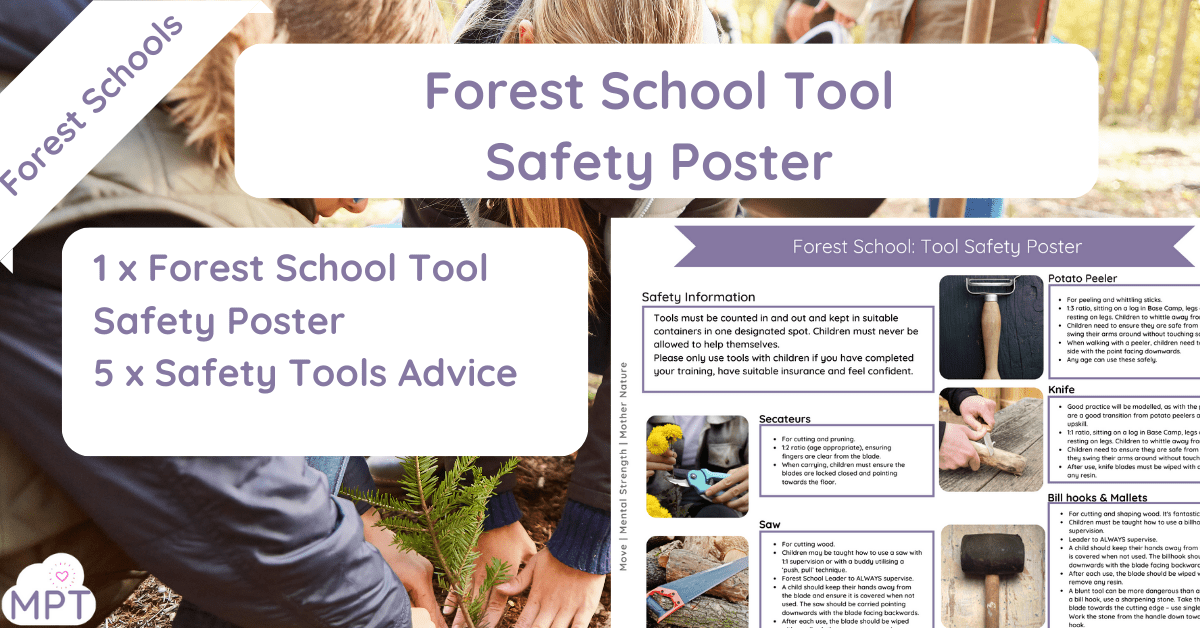
Looking for simple Forest School tool safety ideas to help children understand how to use tools safely outdoors? This resource helps teachers, forest school leaders, outdoor learning leads and early years practitioners introduce tool safety in a calm, clear and child-friendly way. Head to the Beginners Guide to Forest School for more clarity on how this approach is used in school and nursery settings.

This resource is ideal for:

  • forest school tool safety
  • outdoor learning safety
  • tool safety rules for children
  • forest school risk assessment support
  • woodland learning
  • outdoor learning routines
  • EYFS and KS1 forest school
  • SEND-friendly outdoor safety
  • nature club safety
  • primary outdoor learning

It gives children a gentle introduction to safe tool use, boundaries, listening and responsibility during outdoor learning. Ready to download this resource? Sign up for a free 60-day trial. 

What Are Forest School Tool Safety Ideas?

Forest School tool safety ideas are simple ways to help children understand how tools should be carried, used, stored and respected during outdoor learning sessions.

Tool safety may include:

  • listening before using equipment
  • understanding safe spaces
  • carrying tools correctly
  • waiting for adult guidance
  • using tools for the right purpose
  • keeping hands and bodies safe
  • knowing when to stop
  • caring for tools and the outdoor space

The full downloadable resource gives you clearer prompts and practical ways to teach these routines before children begin using tools.

Why Teach Tool Safety in Forest School?

Tool safety is an important part of helping children become confident, responsible and independent outdoors.

When children understand safety routines, they are more likely to:

  • listen carefully
  • respect boundaries
  • follow instructions
  • manage risk
  • look after equipment
  • work calmly
  • care for themselves and others
  • build confidence through responsibility

Forest school safety is not about frightening children.
It is about teaching them how to use tools respectfully and safely.

New to Forest School Tool Safety? Start Here

If tool safety feels overwhelming, start with the basics.

You do not need to introduce lots of tools at once. Begin with clear routines, visual reminders and adult modelling.

Try:

  1. Introduce one tool or resource at a time
  2. Model how to hold, carry and put it down safely
  3. Practise the safety routine before using it in an activity

The aim is not to rush into tool use.
The aim is to build safe habits slowly and consistently.

Try This Tomorrow

If you only do one thing, try a “safe carry” practice.

Choose one simple outdoor resource, such as a child-safe gardening tool, trowel or stick used as a teaching prompt. Model how to carry it safely, walk slowly, keep space from others and return it to a safe place.

Time: 5–10 minutes
Prep: Low
Best for: safety routines, listening, responsibility and outdoor learning confidence

This is a simple starting point. The full Forest School Tool Safety Ideas resource gives you more structured ideas for introducing tool safety outdoors.

Forest School Tool Safety Rules for Children

Children need tool safety rules that are simple, positive and easy to remember.

Useful routines may include:

  • listen before touching
  • walk, do not run
  • keep tools low and close
  • use tools only when an adult says
  • give others space
  • stop when asked
  • return tools safely
  • ask for help if unsure

A calm, repeated routine helps children understand that tools are useful, not toys.

Supporting Risky Play Safely

Forest school often includes managed risk.

Children need opportunities to learn how to use real-world resources responsibly. Tool safety helps children understand that risk can be managed through clear routines, adult support and careful choices.

This can support:

  • independence
  • confidence
  • physical development
  • problem-solving
  • responsibility
  • listening skills
  • patience
  • self-control
  • respect for equipment and nature

The key is careful planning, appropriate supervision and clear expectations.

Autumn Forest School Session Plan (KS1)

Forest School Tool Safety Without Fear

Tool safety should feel calm, not scary.

Children learn best when adults model confidence and consistency. Instead of long warnings, keep instructions short, clear and practical.

For example:

  • “Hold it like this.”
  • “Walk with it low.”
  • “Stop when I say stop.”
  • “Put it back here.”
  • “Check your space.”

The full resource helps you turn these safety messages into child-friendly routines and reminders.

Who Are These Forest School Tool Safety Ideas For?

This resource is ideal for:

  • forest school leaders
  • EYFS teachers
  • KS1 teachers
  • KS2 teachers
  • teaching assistants
  • outdoor learning leads
  • nursery practitioners
  • childminders
  • SENDCos
  • nurture group staff
  • wraparound care providers
  • nature club leaders
  • home educators

It can be used in woodland areas, school gardens, playgrounds, outdoor classrooms, nature clubs, nurseries and primary schools.

There are plenty of resources on our site that support topic work at Forest School sessions. Try our Stone Age Forest School Lesson Idea Pack. 

Tool Safety for SEND and Inclusion

Tool safety routines can be especially helpful for children with SEND.

Some children may need:

  • visual reminders
  • repeated modelling
  • short instructions
  • clear boundaries
  • first/then language
  • adult support
  • predictable routines
  • sensory awareness
  • extra time to practise

The Forest School Tool Safety Ideas resource can help make tool use more accessible, calm and structured for a wider range of children.

Linking Tool Safety to Outdoor Learning

Tool safety can support more than just safe behaviour.

It can also help children build:

  • communication
  • listening and attention
  • turn-taking
  • patience
  • physical coordination
  • confidence
  • resilience
  • respect for shared resources
  • care for the natural world

When taught well, tool safety becomes part of wider outdoor learning, not a separate lecture.

Want Ready-to-Use Forest School Resources?

The Muddy Puddle Teacher Club helps busy teachers, early years teams and outdoor learning leads save planning time with:

✅ ready-to-use outdoor learning resources
✅ forest school safety ideas
✅ tool safety prompts and routines
✅ SEND-friendly outdoor resources
✅ EYFS, KS1 and KS2 nature activities
✅ simple resources you can use straight away

Ready to download this resource? Sign up for a free 60-day trial. 

Download Forest School Tool Safety Ideas

If you want a simple way to introduce safe, responsible tool use outdoors, Forest School Tool Safety Ideas is a brilliant place to start.

It helps children understand tool safety through clear routines, calm modelling and practical outdoor learning.

Ready to download this resource? Sign up for a free 60-day trial. 

FAQs

What is Forest School tool safety?

Forest School tool safety means teaching children how to use, carry, store and respect tools safely during outdoor learning sessions.

How do you teach children to use tools safely outdoors?

You can teach tool safety by introducing one tool at a time, modelling safe use, practising routines, using clear rules and supervising children closely.

What are good tool safety rules for children?

Good tool safety rules include listening first, walking slowly, keeping tools low, giving others space, stopping when asked and returning tools safely after use.

Can tool safety be taught in EYFS and KS1?

Yes. Tool safety can be introduced in an age-appropriate way using simple routines, visual prompts, adult modelling and carefully supervised activities.

Does Forest School tool use need a risk assessment?

Yes. Any tool use in forest school or outdoor learning should be supported by appropriate risk assessment, supervision, staff training and school policies.

Can children with SEND take part in tool safety activities?

Yes. With the right support, visual prompts, adult modelling and clear routines, many children with SEND can take part in tool safety learning in a calm and accessible way.

Do I need lots of tools to teach tool safety?

No. You can begin with one simple tool or outdoor resource and focus on routines, respect, boundaries and safe handling before building further.

You need a subscription to download this file. Log in/Upgrade or Take a 60 Day Free Trial. Feel free to Send us a message if you need help.

New in