
Stone Age Campfire Recipes for Forest School and Outdoor Learning
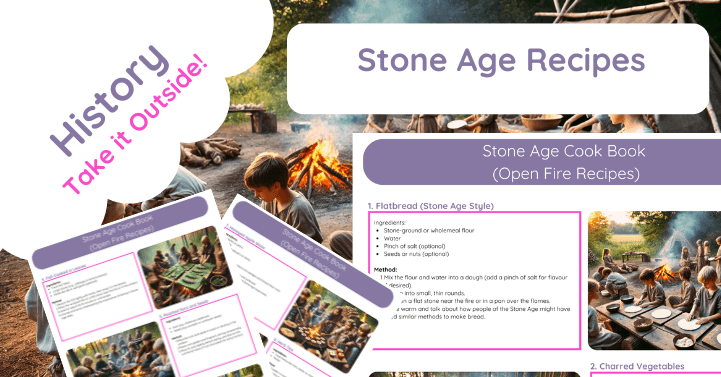
Looking for simple Stone Age recipes for outdoor learning or a campfire cooking activity to link with your history topic? This Campfire – Stone Age Recipes resource helps teachers, forest school leaders and outdoor learning staff bring the Stone Age to life through practical, nature-based learning.
If you are new to this area or would like to know more about how we approach Forest School, explore the Beginners’ Guide to Forest School.
This resource is ideal for:
- Stone Age recipes
- campfire cooking for schools
- forest school cooking
- KS2 Stone Age activities
- outdoor history lessons
- outdoor learning
- Stone Age topic planning
- prehistoric food activities
- experiential learning
- SEND-friendly outdoor learning
It gives children a memorable way to explore history through food, fire, discussion and hands-on outdoor experiences. Ready to make a start? Download this resource, created by Level 3 Forest School Leaders and thousands more with our 60-day free trial.
What is Campfire – Stone Age Recipes?
Campfire – Stone Age Recipes is an outdoor learning resource designed to help children explore what Stone Age food may have been like through simple, school-friendly campfire cooking ideas.
Instead of learning about the Stone Age only through books or worksheets, children can experience part of the topic through practical outdoor learning.
Children can begin to think about:
- what people may have eaten in the Stone Age
- how food was gathered, prepared and cooked
- how fire changed daily life
- how people survived using natural resources
- how food links to history, geography and science
- how outdoor learning can make history feel real
The full downloadable resource gives you structured ideas and recipes so you can run the activity without planning everything from scratch.
New to Stone Age Outdoor Learning? Start Here
If outdoor history lessons feel overwhelming, start simple.
You do not need to recreate the whole Stone Age or run a complicated forest school session. Begin with one practical outdoor learning moment that helps children imagine life in the past.
Try:
- Talk about what Stone Age people may have eaten
- Compare modern food with simple natural ingredients
- Use an outdoor cooking or campfire discussion to bring the topic to life
The aim is not to create a perfect historical reenactment.
The aim is to help children connect with history in a practical, memorable way.
Try This Tomorrow
If you only do one thing, try a Stone Age food discussion outdoors.
Take children outside and ask:
“What food could people eat before supermarkets, ovens or packaged snacks?”
Let children talk about berries, seeds, nuts, meat, fish, roots, plants and fire. You could compare this with what they eat today.
Time: 10–15 minutes
Prep: Very low
Best for: history, discussion, vocabulary, curiosity and outdoor learning
This is a simple starting point. The full Campfire – Stone Age Recipes resource gives you ready-to-use recipe ideas and outdoor learning prompts.
Why Use Campfire Cooking for the Stone Age Topic?
Campfire cooking makes the Stone Age topic feel real.
Children can read about fire, food and survival, but outdoor learning helps them imagine it. When children smell smoke, feel warmth, prepare simple ingredients or talk around a fire area, history becomes more meaningful.
Stone Age campfire activities can support:
- historical understanding
- curiosity
- speaking and listening
- teamwork
- vocabulary development
- outdoor learning confidence
- practical life skills
- sensory learning
- SEND engagement
- memorable topic work
This type of learning helps children understand that history was lived by real people.
Stone Age Food and Outdoor Learning
Food is a powerful way to help children understand the past.
A Stone Age food activity can help children explore questions such as:
What did people eat?
How did they find food?
How did they cook without modern kitchens?
Why was fire so important?
How did the seasons affect food?
What would have been easy or difficult to find?
These questions help children think more deeply about survival, daily life and the relationship between people and nature.
Forest School Cooking Without Overcomplicating It
Forest school cooking does not need to feel complicated.
The most important things are:
- safety
- supervision
- simple ingredients
- clear routines
- age-appropriate tasks
- careful food hygiene
- school policy and risk assessment
- calm adult modelling
The full Campfire – Stone Age Recipes resource gives you a more structured way to introduce the activity while keeping the focus on outdoor learning and history.
Gain some specific ideas for Year 6 boys
Stone Age Recipes for KS2
The Stone Age topic is often taught in KS2, and campfire recipes can be a brilliant way to add practical learning to the unit.
This resource can help children explore:
- hunter-gatherer lifestyles
- food sources
- fire and survival
- early cooking methods
- natural ingredients
- seasonal eating
- simple food preparation
- how daily life has changed over time
It is a good way to support children who learn best through doing, talking, moving and experiencing.
Campfire Cooking and Curriculum Links
A Stone Age campfire recipe session can link to several curriculum areas.
It can support:
- history: Stone Age life, food, tools, survival and settlements
- science: materials, heat, changes and plants
- geography: local environments, natural resources and seasonal change
- English: discussion, vocabulary, instructions and explanation writing
- PSHE: teamwork, safety, patience and responsibility
- outdoor learning: risk awareness, nature connection and practical skills
This makes the resource useful for topic work, forest school sessions, outdoor learning days or enrichment activities. For more Forest School Lesson Plans head to the Forest School Hub.
Campfire Safety for Schools
Any school campfire cooking activity should be carefully planned and risk assessed.
Before using fire outdoors, schools should consider:
- staff training
- adult-to-child ratios
- allergies and dietary requirements
- food hygiene
- fire safety routines
- safe fire areas
- emergency procedures
- school policies
- supervision at all times
This page gives a starting point for thinking about outdoor learning, but the full resource should always be used alongside your school’s own safety procedures and risk assessments. For more campfire ideas, try these Around The World Cooking ideas for Forest School.
Stone Age Outdoor Learning for SEND
Practical outdoor history can be especially helpful for children with SEND.
Children can take part by:
- watching
- smelling
- tasting where appropriate
- stirring or mixing with support
- matching ingredients
- choosing between options
- listening to discussion
- using pictures or symbols
- helping with simple routines
- working with a trusted adult
Outdoor cooking can support communication, sensory learning, confidence, regulation and engagement.
For children who find written history tasks difficult, practical outdoor learning can offer a different route into understanding.
Outdoor History Lessons That Children Remember
Children often remember learning that they can feel, smell, taste, build, move through and talk about.
A Stone Age campfire recipe session can help children remember:
- how important fire was
- how food was linked to survival
- how people depended on nature
- how different life was before modern homes and shops
- how communities may have worked together
This is the kind of outdoor learning that stays with children because it feels real.
When Could You Use Campfire – Stone Age Recipes?
You could use this resource:
- during a KS2 Stone Age topic
- as part of a forest school session
- during outdoor learning week
- for a history enrichment day
- as a hook for a new topic
- after learning about hunter-gatherers
- before writing instructions
- during a school campfire cooking activity
- as part of a cross-curricular outdoor lesson
- with small groups or nurture groups
It can be adapted depending on your space, staffing, age group and school policies.
Want Ready-to-Use Forest School Resources?
The Muddy Puddle Teacher Club helps busy teachers, forest school leads and outdoor learning teams save planning time with:
✅ ready-to-use outdoor learning resources
✅ forest school cooking ideas
✅ Stone Age outdoor learning activities
✅ KS2 topic resources
✅ SEND-friendly outdoor learning ideas
✅ simple resources you can use straight away
Ready to make a start? Download this resource, created by Level 3 Forest School Leaders and thousands more with our 60-day free trial.
Download Campfire – Stone Age Recipes
If you want a practical way to bring the Stone Age topic to life, Campfire – Stone Age Recipes is a brilliant place to start.
It helps children explore prehistoric food, fire, survival and history through outdoor learning and simple campfire cooking ideas.
Ready to make a start? Download this resource, created by Level 3 Forest School Leaders and thousands more with our 60-day free trial.
FAQs
What are Stone Age recipes for children?
Stone Age recipes for children are simple food-based activities inspired by what people may have eaten during the Stone Age. They often use natural, basic ingredients and help children think about food, survival and daily life in the past.
How can you teach the Stone Age outdoors?
You can teach the Stone Age outdoors through campfire cooking, shelter building, natural materials, food discussions, hunter-gatherer activities, timeline work, outdoor storytelling and practical history experiences.
Is campfire cooking good for outdoor learning?
Yes. Campfire cooking can support outdoor learning by helping children develop practical skills, teamwork, patience, safety awareness, discussion and curiosity. It can also make history and science feel more meaningful.
Can this resource be used for KS2?
Yes. Campfire – Stone Age Recipes is especially useful for KS2 children learning about the Stone Age, hunter-gatherers, fire, food, survival and prehistoric life.
Do I need a forest school area?
No. You do not always need a woodland area, but you do need a safe outdoor space that follows your school’s fire safety procedures, risk assessments and policies.
Is this suitable for SEND children?
Yes. Outdoor cooking and Stone Age activities can be adapted for children with SEND through sensory experiences, adult support, visual prompts, simple choices and practical participation.
What curriculum areas does this link to?
This resource can link to history, science, geography, English, PSHE, outdoor learning and forest school. It is especially useful for practical KS2 Stone Age topic work.
Do schools need to risk assess campfire cooking?
Yes. Any campfire cooking activity in school should be risk assessed and follow school policies, fire safety procedures, food hygiene guidance and appropriate supervision.
Can children cook actual Stone Age food?
Children can explore school-friendly recipes inspired by Stone Age food. It is important to remember that these are educational interpretations rather than exact historical recipes.
Why use food to teach the Stone Age?
Food helps children understand daily life, survival, nature, community and the importance of fire. It makes the Stone Age topic more practical, memorable and meaningful.