
What does excellent early years practice really look like, and how can settings build an approach that supports the child, family, workforce and wider community?
In this thought-provoking episode of the Outdoor Learning Podcast Hub. , Sarah Seaman speaks with Dr June O’Sullivan OBE about the seven interconnected strands of the London Early Years Foundation’s Social Justice Pedagogy.
June developed the LEYF Social Pedagogy as a practical framework for community-based, inclusive and ambitious early years education. Its seven strands work together like the fibres of a strong rope, supporting children, families and early years professionals rather than treating education as a collection of separate targets. (June O’Sullivan)
Sarah and June explore leadership, curriculum, enabling environments, relationships, health, home learning and community connection. Their conversation offers early years practitioners a valuable opportunity to reflect on the culture, values and daily experiences within their own setting.
This episode is ideal for nursery teams, EYFS teachers, childminders, SENDCos, early years leaders, students and anyone interested in creating fairer and more meaningful experiences for young children.
Explore our Outdoor Play Hub, discover practical support in our Early Years Outdoor Learning Hub and listen to more episodes of Let’s Talk All Things Muddy!
Listen to Let’s Chat About the Seven Strands with Dr June O’Sullivan OBE.
Who Is Dr June O’Sullivan OBE?
Dr June O’Sullivan OBE is the Chief Executive of the London Early Years Foundation, known as LEYF.
She is an early years leader, author, speaker, campaigner and social entrepreneur who has played a significant role in developing LEYF into a major charitable childcare social enterprise.
June’s work focuses on high-quality early education, social justice, child poverty, sustainability, community involvement and the role businesses can play in creating positive social change.
She developed LEYF’s Social Justice Pedagogy to champion an early years model that recognises the importance of children’s relationships with their families, communities and wider world.
At the heart of this approach is the belief that every person has potential, value and something meaningful to contribute when genuine opportunities for inclusion are created. (LEYF Nurseries)
What Are the Seven Strands?
The seven strands form LEYF’s Social Justice Pedagogy.
They are not seven isolated projects or a checklist to complete. They are designed to be woven together so that leadership, learning, relationships, health, families and communities all contribute to children’s experiences.
The seven strands are leading for a culture of excellence, spiral curriculum, enabling environments, harmonious relationships, safe, fit and healthy, home learning and a multi-generational approach. (LEYF Nurseries)
LEYF describes this pedagogy as a model that supports holistic learning, wellbeing, happiness, inclusion, equality and empathy while giving children a voice in their learning and care. (LEYF Nurseries)
In the podcast, Sarah and June discuss what these ideas can mean in real early years settings and how practitioners can use them to reflect on their own provision.
Why Are the Strands Described as a Rope?
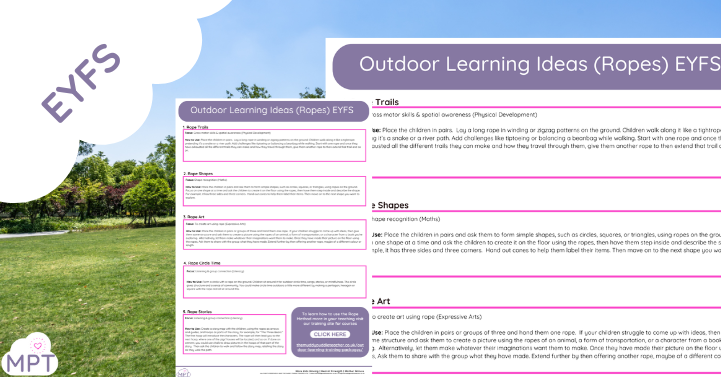
June uses the image of a rope to explain how the seven strands connect.
Each strand contains many smaller threads. Together, these threads create a strong learning rope that supports children, families and professionals.
This is an important distinction.
A setting cannot create excellent early years practice by concentrating only on activities or curriculum statements. Children’s learning is also affected by leadership, staff culture, family relationships, physical environments, wellbeing and their connection to the wider community.
When one strand is weak or disconnected, the child’s overall experience may be affected.
The rope metaphor reminds us that quality is created through the relationship between all aspects of provision, not through one fashionable initiative. (June O’Sullivan)
Strand One: Leading for a Culture of Excellence
The first strand is leading for a culture of excellence.
This is about more than policies, inspections or senior leaders telling staff what to do.
A culture of excellence grows when people understand the setting’s purpose, believe in its values and see those values reflected in everyday decisions.
Leaders influence how staff communicate, how mistakes are handled, how new ideas are tested and whether practitioners feel trusted to develop.
Strong leadership also means remaining ambitious for every child, including children affected by poverty, discrimination, disadvantage or additional needs.
In the podcast, this strand provides an opportunity to consider whether a setting’s values are genuinely lived or simply displayed on a wall.
Early years teams might reflect on how leaders model professional curiosity, kindness, inclusion and high expectations.
The podcast can also complement formal Early Years Outdoor Learning Training, whole-school development and The Muddy Puddle Teacher® online courses.
Strand Two: The Spiral Curriculum
The second strand is the spiral curriculum.
A spiral curriculum allows children to revisit ideas, knowledge and experiences over time. Each return creates an opportunity to deepen understanding, make new connections and extend learning.
Young children rarely learn something once and then consider it complete.
They repeat actions, revisit stories, return to favourite materials and test similar ideas in different contexts.
A child may explore capacity through water one week, sand the next and mud later. Each experience adds another layer of understanding.
Outdoor learning naturally supports this repeated and deepening process because environments, materials and conditions continually change.
Children can return to the same space across different seasons, weather conditions and stages of development.
The adult’s role is to notice what children already understand and help them move forward without rushing them through a rigid sequence.
Discover more through our Early Years Outdoor Play Resources and Outdoor Continuous Provision Ideas.
Under the Sea Outdoor Continuous Provision Ideas for Toddlers
Strand Three: Enabling Environments
The third strand is enabling environments.
An enabling environment supports children to become active, curious and confident learners.
This includes indoor and outdoor spaces.
It is not simply about making an area look attractive. The environment should give children genuine opportunities to move, communicate, investigate, rest, collaborate, take appropriate risks and make choices.
LEYF describes this strand as using nursery spaces, inside and outside, to create exciting learning opportunities. (LEYF Nurseries)
Outdoors, an enabling environment might include open-ended materials, accessible storage, opportunities for large movement, quieter areas, natural elements and spaces children can transform.
The environment should also reflect the children and communities using it.
Adults can ask whether children are able to access resources independently, whether all children feel represented and whether the space encourages exploration rather than compliance.
Explore our Outdoor Play Provision Guide and Early Years Outdoor Environment Ideas.
Strand Four: Harmonious Relationships
Harmonious relationships sit at the centre of the seven-strand model.
This strand focuses on building loving and respectful relationships between staff, children and families.
June has described harmonious relationships as a powerful central strand because the ability to form and nurture relationships is fundamental to children’s development and humanity. (LinkedIn)
Children learn through relationships.
They are more likely to explore, communicate and take manageable risks when they feel emotionally secure.
Harmonious does not mean that everyone agrees all the time or that difficult emotions are avoided.
It means creating relationships where people can communicate honestly, repair difficulties and treat one another with dignity.
For practitioners, this may involve slowing down, listening carefully and reflecting on how adult behaviour affects the emotional atmosphere of the setting.
For children, it means having adults who know them, respond consistently and value their ideas.
For families, it means being treated as partners rather than observers.
Strand Five: Safe, Fit and Healthy
The fifth strand is safe, fit and healthy.
It includes children’s safety, nutrition, physical activity and wider wellbeing.
LEYF connects this strand with nutritious food, active experiences, health and keeping children safe. (LEYF Nurseries)
Being safe does not mean removing every challenge.
Children need opportunities to develop physical confidence, assess manageable risks and understand their own capabilities.
Outdoor play can support strength, coordination, balance, stamina and body awareness.
It can also provide space for energetic movement that may be difficult to accommodate indoors.
Settings should consider how health is supported throughout the whole day, including meals, movement, rest, emotional wellbeing and access to outdoor spaces.
A healthy early years environment should not make children fearful of dirt, weather or physical challenge. It should teach them how to engage with these experiences safely.
Strand Six: Home Learning
The sixth strand is home learning.
Home learning does not have to mean worksheets, formal homework or placing extra pressure on families.
It is about recognising the enormous amount of learning that happens through everyday conversations, routines, relationships and shared experiences.
LEYF describes this strand as working through conversations with parents to extend and enrich children’s development between home and nursery. (LEYF Nurseries)
Families hold valuable knowledge about their children.
They understand their interests, routines, culture, communication and experiences outside the setting.
Strong home-learning partnerships should therefore be based on two-way communication.
Practitioners can share simple ideas that fit naturally into family life, such as noticing numbers on a walk, talking about the weather, collecting natural treasures or retelling a familiar story.
The aim is not to recreate nursery at home.
It is to help families recognise and enjoy the learning already present in everyday life.
Explore our Outdoor Learning Ideas for Parents and join our Free Outdoor Learning Magazine.
Strand Seven: A Multi-Generational Approach
The seventh strand is a multi-generational approach.
This strand connects children and families with the wider community.
LEYF describes it as helping families grow together and find their place in a changing world through local community connections. (LEYF Nurseries)
Children benefit from relationships with people of different ages, experiences and backgrounds.
A multi-generational approach might involve grandparents, neighbours, community groups, local businesses, artists, gardeners or residents.
These connections can broaden children’s understanding of the world and create a stronger sense of belonging.
They can also help settings become part of the community rather than operating as isolated institutions.
Outdoor projects offer particularly meaningful opportunities for this work.
Families and community members might help develop a growing area, share local stories, take part in seasonal events or support environmental projects.
These experiences can build social and cultural capital while helping children recognise that they are valued members of a wider community.
What Is Social Justice Pedagogy?
Social Justice Pedagogy is based on the idea that education can help create a fairer, more sustainable and compassionate world.
It recognises that children and adults exist within networks of relationships involving families, communities, society and the environment.
At LEYF, the seven strands are used to connect high-quality education with equity, community impact and the three dimensions of sustainability: economic, social and environmental. (LEYF Nurseries)
This means considering who has access to opportunities, whose voices are heard and whether children from every background are supported to thrive.
Social justice in early years education is not an additional topic to teach for one week.
It is reflected in leadership decisions, relationships, curriculum choices, environments, family partnerships and expectations for children.
How Do the Seven Strands Connect with Outdoor Learning?
Outdoor learning can support every one of the seven strands.
Leaders can establish a culture where outdoor learning is valued as part of normal provision rather than treated as a reward.
A spiral curriculum can revisit ideas through changing seasons and repeated practical experiences.
Enabling environments can give children space to investigate, move and make decisions.
Harmonious relationships can grow through shared outdoor play and side-by-side conversations.
The safe, fit and healthy strand is strengthened through physical activity, fresh air and opportunities to understand manageable risk.
Home learning can include simple outdoor experiences that families can enjoy together.
A multi-generational approach can connect children with community gardens, local groups and shared environmental projects.
Outdoor learning is not separate from strong early years pedagogy. It can become one of the ways the pedagogy is brought to life.
Free Level 1 Outdoor Learning Course.
Try This Tomorrow
Choose one of the seven strands and observe how it appears in your setting during an ordinary day.
Do not begin by creating a new display or action plan.
Watch what actually happens.
You might observe who makes decisions, how children use the environment, how adults respond to conflict or how families are welcomed.
Record one strength and one area that could be improved.
Then agree on one manageable change with your team.
Time: fifteen to twenty minutes of observation.
Preparation: very low.
Best for: reflective practice, staff development, leadership and early years quality improvement.
The following week, choose another strand and repeat the process.
Use This Podcast for Early Years Staff Development
This episode would make a valuable starting point for a nursery or EYFS staff meeting.
Invite staff to listen to the conversation before the meeting or play a selected section together.
Ask each person to identify which strand feels strongest in the setting and which needs greater attention.
Teams could then discuss how the strands connect rather than treating them as separate responsibilities.
For example, an enabling environment may be weakened when staff do not feel confident, relationships are inconsistent or leadership expectations are unclear.
Choose one shared priority rather than attempting to overhaul all seven areas at once.
Free Level 1 Outdoor Learning Course.
Listen to Let’s Chat About the Seven Strands
This episode encourages practitioners to look beyond individual activities and consider the whole culture surrounding a child.
Excellent early years education is shaped by what children learn, but also by how they feel, who knows them, how families are involved and whether they experience a genuine sense of belonging.
Listen as Sarah and June explore the seven strands, social justice, leadership and the relationships that hold early years communities together.
Listen to Let’s Chat About the Seven Strands with Dr June O’Sullivan OBE now.
Discover more conversations through the Let’s Talk All Things Muddy Outdoor Learning Podcast.
Join our free weekly Outdoor Learning Magazine for practical early years ideas and outdoor inspiration.
Start your 60-day free trial to explore hundreds of outdoor learning, play and SEND resources.
Frequently Asked Questions
What are the seven strands of LEYF’s pedagogy?
The seven strands are leading for a culture of excellence, spiral curriculum, enabling environments, harmonious relationships, safe, fit and healthy, home learning and a multi-generational approach. (LEYF Nurseries)
Who developed the seven-strand approach?
Dr June O’Sullivan led the development of LEYF’s Social Pedagogy, working with colleagues to create an interconnected framework for supporting children, families and early years professionals. (June O’Sullivan)
What is the purpose of Social Justice Pedagogy?
Its purpose is to provide high-quality, holistic education while promoting inclusion, wellbeing, equality, community participation and social impact.
Can other early years settings use the seven strands?
The ideas can support reflection in other settings, although teams should engage carefully with LEYF’s model rather than simply copying headings. The greatest value comes from considering how the principles connect with the setting’s own children, families and community.
How do the seven strands relate to outdoor learning?
Outdoor learning can support all seven strands through active curriculum experiences, enabling environments, physical wellbeing, strong relationships, family engagement and community-based projects.

Author Box
Written by Sarah Seaman PGCE MA
Founder of The Muddy Puddle Teacher®
Teacher for over 19 years
Bloomsbury author
Trainer of thousands of teachers across the UK