
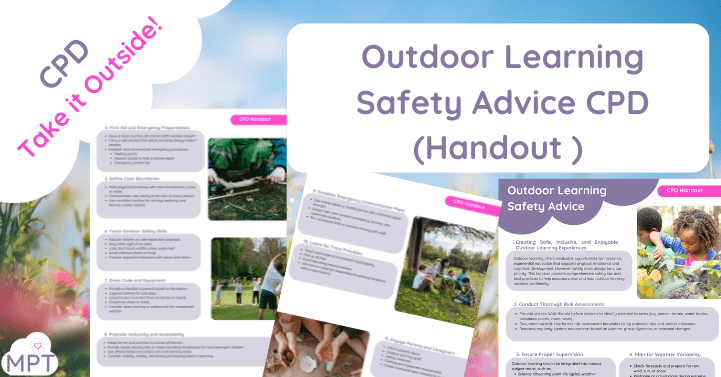
Outdoor Learning Safety Advice (CPD Handout)
Empowering Educators to Lead Safe and Inspiring Outdoor Learning
Designed as a practical and accessible guide, the Outdoor Learning Safety Advice (CPD Handout) is an essential resource for primary educators looking to confidently take learning beyond the classroom walls. This CPD handout provides clear, actionable safety guidance to support outdoor teaching, whether in school grounds, local parks, or forest settings.
✅ What’s Inside:
-
Key risk assessment tips tailored for outdoor environments
-
Guidance on supervising and managing groups in open spaces
-
Weather preparedness and appropriate clothing advice
-
First aid considerations and emergency procedures
-
Checklists for equipment, boundaries, and safe exploration
🧠 Ideal for:
-
Teachers undertaking CPD in outdoor learning
-
School leaders developing risk management policies
-
EYFS, KS1 and KS2 educators planning nature-based lessons
📝 Ready to print or share digitally, this handout fits perfectly into any CPD toolkit, INSET day, or staff training session.
Outdoor Learning Safety Advice for Primary Educators
Outdoor learning is becoming an essential part of the modern classroom. From forest school sessions to playground-based science experiments, taking learning outside supports physical health, mental wellbeing, and real-world engagement. But to make it successful, it must be safe.
If you’re planning to introduce or expand your outdoor learning provision, safety is your first priority. In this blog, we’ll share essential outdoor learning safety advice for primary teachers—whether you’re teaching in urban settings, woodland areas, or your school grounds.
Why Outdoor Learning Matters
Outdoor learning goes beyond fresh air and fun—though those are definite perks! Studies show that regular exposure to natural environments can improve concentration, boost creativity, and reduce stress in children.
For curriculum-aligned resources and support, check out The Muddy Puddle Teacher, a pioneer in outdoor learning with training, planning, and eco-friendly teaching methods.
Outdoor Learning Safety Advice: 5 Key Tips
1. Conduct Thorough Risk Assessments
Before any session, carry out a detailed risk assessment. Think about:
-
The physical environment (slopes, water, uneven terrain)
-
Weather conditions
-
Hazards such as stinging plants or animal droppings
-
Emergency access and communication
Download our Outdoor Learning Safety Advice CPD Handout for a printable checklist!
2. Set Clear Boundaries and Expectations
Children should know where they can and cannot go. Use natural boundaries (trees, logs, fences), and explain them clearly. Practice “stop” signals, buddy systems, and regular headcounts.
3. Prepare for All Weather
Outdoor learning happens rain or shine! Encourage children to dress appropriately:
-
Waterproof jackets and trousers
-
Layered clothing
-
Hats and gloves in colder months
-
Sun hats and SPF in summer
Having a stash of spare clothes in school can be a lifesaver!
4. First Aid and Emergency Planning
Ensure someone trained in pediatric first aid is present. Carry a mobile phone, a small first aid kit, and a list of emergency contacts. Know the exact location or postcode of your outdoor learning space.
Need support planning these systems? The Muddy Puddle Teacher offers training on creating safe and manageable outdoor learning environments.
5. Involve the Whole School Community
Engage teaching staff, parents, and leadership teams in your outdoor learning safety approach. This helps ensure consistency and support across all year groups.
Ready to Take Learning Outside?
By following these outdoor learning safety tips, you can create meaningful experiences that are both exciting and secure for your pupils.
Looking to go deeper? Visit The Muddy Puddle Teacher for outdoor learning CPD, free lesson plans, and a community of like-minded educators making nature their classroom.
Stay safe. Stay curious. Stay muddy.
🔗 Want a free Outdoor Learning Safety Handout for your staff training or INSET day? Click here to download.