
KS2 Listening and Responding Outdoor Learning Activities
Looking for simple KS2 listening and responding activities you can take outside? Listening and responding are important skills for speaking and listening, PSHE, teamwork, music, drama, literacy, wellbeing and classroom communication. Outdoor learning gives children space to practise these skills in a practical, meaningful and memorable way. Are you new to outdoor learning explore this article to learn more : What is Outdoor Learning?
In KS2, children are developing the ability to listen carefully, respond thoughtfully, build on someone else’s idea, ask questions, follow instructions, work as a team and reflect on what they hear. Taking this learning outdoors can make it more active and purposeful.
At The Muddy Puddle Teacher®, we believe outdoor learning should support the whole child. Listening is not just about being quiet. It is about noticing, understanding, thinking, responding and respecting others. The outdoors is full of natural listening opportunities, from birdsong and wind to group challenges, drama games, sound maps and reflective discussions. Download this resource and 1000’s more – take a 60-day free trial.
New to Outdoor Listening Activities? Start Here
If teaching listening and responding outdoors feels overwhelming, start with one short listening task and one clear response.
You might ask children to listen to the sounds around them for one minute, then share what they heard. You might ask them to listen to a partner describe a route, then follow it. You might ask them to listen to a sound, poem, story opening or instruction and respond through movement, drawing, writing or discussion.
The key is to make listening active. Children need a purpose for listening. They might be listening to identify sounds, follow directions, solve a problem, respond creatively, understand someone’s opinion or build on a group idea.
Outdoor listening works best when children know what they are listening for and how they will respond afterwards.
Try This Tomorrow
If you only do one thing, try this simple KS2 listening and responding activity.
Outdoor Sound Map
Take children outside and ask them to sit or stand quietly in a safe outdoor space. Give them a clipboard and ask them to draw themselves in the middle of the page. For two minutes, they listen carefully and mark the sounds they hear around them.
They might hear birds, leaves, footsteps, voices, traffic, wind, rain, doors, insects, playground sounds or distant machinery.
Time: 15–20 minutes
Prep: Low
Resources: Clipboards, paper, pencils and an outdoor space
Learning: Listening, focus, observation, sound vocabulary, mapping, reflection and response
Afterwards, children compare sound maps with a partner. Ask them, what sound was closest, what sound was furthest away, what sound was loudest, what sound was quietest, what did your partner hear that you missed, how did the outdoor space feel when you listened carefully?
This gives children an immediate outdoor listening success and helps them understand that listening is an active skill.
Why Teach Listening and Responding Outdoors in KS2?
Teaching listening and responding outdoors helps children practise communication in a different context. Outside, there are more sounds, distractions and real-world situations, which means children need to listen with purpose.
Outdoor learning can help children become more aware of their environment, their bodies and each other. They learn to listen to natural sounds, spoken instructions, partner ideas, group decisions, stories, music, poetry and their own feelings.
In KS2, listening and responding can support English, music, drama, PSHE, wellbeing, geography fieldwork, science observation, forest school, teamwork and behaviour.
It also helps children develop respect. When children listen carefully to someone else, they learn that ideas, feelings and perspectives matter.
KS2 Listening Walks
A listening walk is a simple but powerful way to help children slow down and tune in.
Take children on a short walk around the school grounds, woodland area, playground or local space. Ask them to walk quietly and notice the sounds around them. They can respond by making a sound map, writing a list, ranking sounds from calmest to noisiest or choosing one sound to describe in detail.
You might ask, which sound did you notice first, which sound was natural, which sound was made by people, which sound changed as we moved, which sound made you feel calm, which sound felt distracting?
This activity links well to geography, music, literacy and wellbeing.
Listening and Responding Through Music Outdoors
Outdoor spaces are perfect for exploring sound and music.
Children can listen to natural sounds and respond by creating rhythms, body percussion or short soundscapes. They might use clapping, tapping, stamping, rubbing sticks, shaking leaves or using found natural objects safely to recreate what they heard.
For example, light finger tapping could represent rain, rustling leaves could represent wind, soft foot taps could represent footsteps and quiet humming could represent distant sounds.
Children can work in groups to create an outdoor soundscape, then perform it for others. The audience listens and responds by identifying the sounds, describing the mood and explaining what they noticed.
This supports music, creativity, listening, teamwork and evaluation.
Listening and Responding Through Drama
Drama gives children a clear reason to listen and respond.
Outside, children can take part in call-and-response games, freeze frames, role play, conscience alley, story trails and character interviews.
For example, in a story-linked outdoor drama session, one child might act as a character and others ask questions. The character must listen carefully and respond in role.
Children could also create freeze frames in response to a sentence, sound or story moment. The adult might say, you hear footsteps behind you in the forest, or the wind suddenly changes direction, and children respond with body language and expression.
This helps children understand that responding does not always have to be verbal. It can be physical, emotional and creative.
Listening and Responding Through Outdoor Stories
Outdoor storytelling is a brilliant way to build listening and response skills in KS2.
Read a short story extract, myth, poem or descriptive passage outside. Ask children to listen for key details, mood, setting, character feelings or powerful vocabulary.
After listening, children can respond by drawing the setting, acting out a scene, creating a map, writing a continuation, choosing natural objects to represent characters or discussing how the text made them feel.
You might ask, what did you hear that helped you picture the setting, which word stayed in your mind, how did the character feel, what do you think might happen next, what question would you ask the author?
This links listening directly to comprehension and creative response.
Partner Listening Challenges
Partner work helps children practise listening to one person carefully.
One child can describe an outdoor object, route, pattern or arrangement while the other child listens and responds.
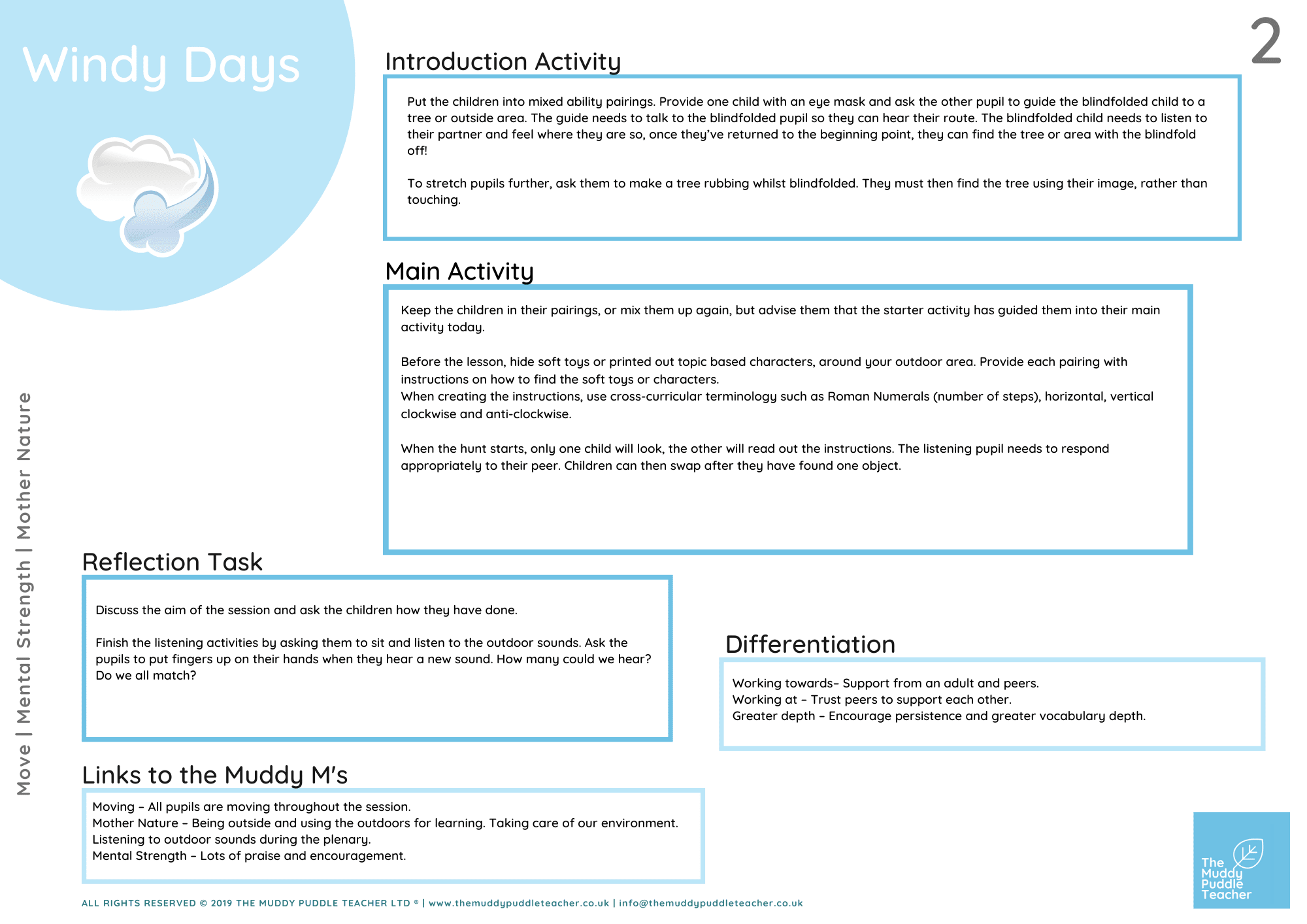
For example, one child creates a pattern with stones, leaves and sticks. They describe it to their partner, who must recreate it without seeing it. The partner has to listen carefully, ask clarifying questions and respond accurately.
You might also ask children to give directions around cones, describe a hidden object, explain how to build a mini shelter or guide a partner to a location using positional language.
This supports speaking, listening, vocabulary, cooperation and problem-solving.
Listening and Responding Through Teamwork
Outdoor teamwork challenges naturally require listening and responding.
Children might build a bridge, create a shelter, complete a treasure trail, solve an outdoor puzzle, design a nature sculpture or transport loose parts from one area to another.
The focus is not just on the finished task. It is on how the group listened and responded to each other.
After the challenge, ask children to reflect. Who listened well, how did the group make decisions, did everyone get a chance to speak, what happened when people disagreed, how did you respond to a different idea?
This helps children understand listening as part of respectful teamwork.
Listening and Responding in PSHE
Listening and responding are key PSHE skills.
Outside, children may feel more relaxed when discussing feelings, friendships, conflict and wellbeing. You could use a talking object, such as a stone, shell or pine cone, and ask children to listen without interrupting.
A discussion might focus on questions such as, what helps you feel listened to, how can we show respect when someone is speaking, what should we do if we disagree, how can we respond kindly, why do some people find listening hard?
Children can respond through partner talk, group discussion, written reflections, natural object choices or quiet thinking.
Outdoor PSHE can feel less pressured because children have space, movement and nature to support reflection.
Listening and Responding to Nature
Listening to nature can help children develop attention, patience and calm.
Ask children to choose one natural sound and listen to it carefully. It might be wind in leaves, birdsong, rain, insects, grass moving, water dripping or footsteps on gravel.
Children can respond by writing a poem, drawing a sound, creating a movement, making a soundscape or describing the mood.
You might ask, if this sound was a colour, what colour would it be, if this sound was a feeling, what would it be, how does this sound change, what does it remind you of?
This supports creativity, sensory awareness and wellbeing.
Listening and Responding in Outdoor Literacy
Listening is an important part of literacy. Children need to listen to vocabulary, rhythm, expression, dialogue and ideas.
Outdoors, children can listen to a poem and respond by finding natural objects that match the mood. They can listen to a setting description and build the setting with loose parts. They can listen to a set of instructions and complete a task. They can listen to a partner’s sentence and improve it together.
You might read a short poem about wind, rain, trees or seasons, then ask children to respond by writing one line of their own.
This helps children understand that listening can lead to stronger writing. Download this resource and 1000’s more – take a 60-day free trial.
Listening and Responding for Children Who Need More Support
Some children may find listening and responding difficult because of attention, language, auditory processing, anxiety, sensory needs or confidence.
Outdoor learning can help, but it can also add distractions, so keep tasks clear and structured. Use short instructions, visual prompts, repeated routines and a defined listening focus.
Some children may respond better by drawing, pointing, choosing an object, moving, building or talking to a partner rather than speaking to the whole group.
You might say, listen for one sound, show me where it came from, draw what you heard, choose an object that matches the sound, tell your partner one thing.
The aim is to build listening confidence slowly and successfully.
Listening and Responding for Greater Challenge
For children who are ready for more challenge, ask them to evaluate and build on what they hear.
They might compare two sound maps, respond to a partner’s opinion, ask follow-up questions, summarise someone else’s idea, create a group soundscape, lead a listening walk or explain how listening changed their thinking.
You might ask, can you repeat your partner’s idea in your own words, can you add to that point, what question could you ask, do you agree or disagree and why, what did you hear that changed your mind?
This helps children move from simply hearing to active listening and thoughtful response.
Want Ready-to-Use KS2 Listening and Responding Resources?
The Muddy Puddle Teacher® helps busy teachers save planning time with simple, curriculum-linked outdoor learning resources.
Inside the Muddy Puddle Teacher® membership, you will find ready-to-use KS2 outdoor learning activities, speaking and listening prompts, outdoor literacy ideas, PSHE activities, music and sound ideas, drama tasks, SEND support, forest school links and simple planning to help you take learning outside.
Our resources are designed to help you use your school grounds, reduce planning stress and make outdoor learning feel manageable, purposeful and meaningful.
Year Six Big Write Ideas Outdoors
Ready for More KS2 Outdoor Learning Ideas?
If you enjoyed these KS2 listening and responding outdoor learning activities, you can access hundreds more outdoor learning resources inside The Muddy Puddle Teacher®.
Start today with a 60-day free trial and explore outdoor learning resources for KS2, KS1, EYFS, SEND, forest school, outdoor play, literacy, PSHE, wellbeing, music and curriculum-linked teaching.
Start with one sound map, one listening walk or one partner direction challenge, then build from there.
Outdoor listening does not have to be complicated. It just needs a clear focus, a calm space and time for children to notice, think and respond. Download this resource and 1000’s more – take a 60-day free trial.
KS2 Listening and Responding FAQs
What are KS2 listening and responding activities?
KS2 listening and responding activities help children practise focused listening, following instructions, responding to ideas, asking questions, building on others’ thoughts and communicating respectfully.
How can I teach listening and responding outdoors?
You can teach listening and responding outdoors through sound maps, listening walks, partner direction challenges, outdoor storytelling, drama games, soundscapes, PSHE circles and teamwork tasks.
Why is outdoor learning good for speaking and listening?
Outdoor learning is good for speaking and listening because children have real experiences to discuss, space to move, purposeful tasks and opportunities to practise communication in practical situations.
What is an outdoor sound map?
An outdoor sound map is an activity where children listen carefully to sounds around them and draw or mark where those sounds are coming from on a page.
Can listening and responding activities support wellbeing?
Yes. Listening and responding activities can support wellbeing by encouraging calm, focus, reflection, respectful communication and connection with nature.
Can outdoor listening activities support SEND learners?
Yes. Outdoor listening activities can support SEND learners when tasks are clear, visual, practical and flexible. Children can respond through drawing, pointing, movement, choosing objects, partner talk or short spoken responses.
Do I need special resources for outdoor listening activities?
No. You can use simple resources such as clipboards, pencils, chalk, natural objects, story prompts, sound maps, cones, talking objects and your outdoor space.