
a

Training & Resources

muddy puddle teacher logo

The Muddy Puddle Teacher ®

Leading with Outdoor Learning and Outdoor Play

Home 9 All Outdoor Learning Resources 9 Gardening Therapy
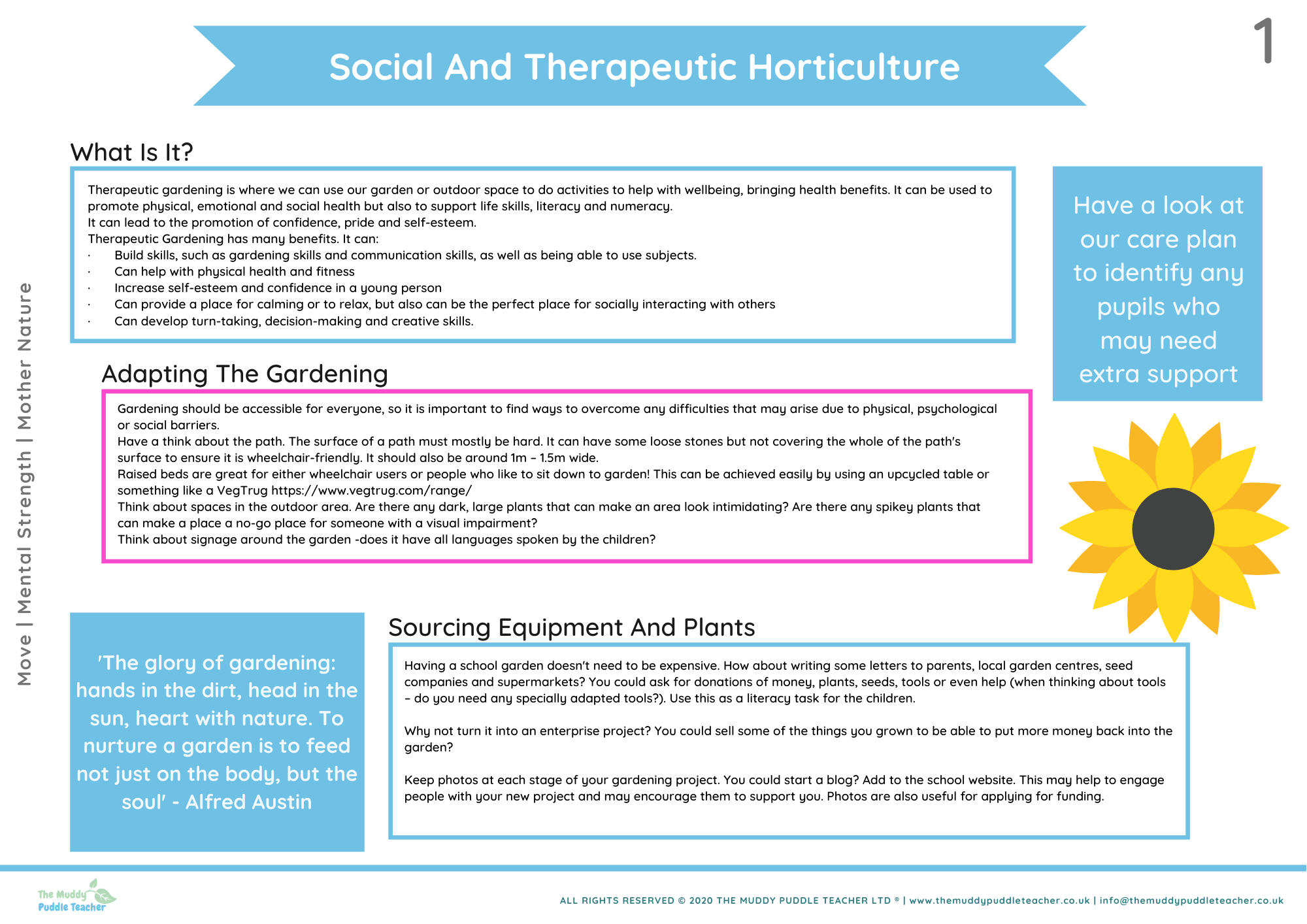
gardening therapy

Gardening Therapy

Download

Garden Therapy Intervention for SEND: Outdoor Learning to Support Regulation, Confidence and Wellbeing

Garden Therapy Intervention for SEND

Looking for a simple garden therapy intervention for SEND? This guide gives teachers, SENDCos, teaching assistants, nurture staff and pastoral teams a practical way to use gardening, nature and outdoor learning to support regulation, behaviour, confidence and wellbeing. Explore our Beginners Guide to SEND Outdoors for some starter tips. 

Garden therapy does not need to mean a huge school garden, expensive equipment or a specialist programme. In schools, a garden therapy intervention can be a short, repeated outdoor routine where children care for plants, notice nature, use their hands purposefully and feel calmer through meaningful outdoor work.

For children with SEND, the outdoors can offer movement, sensory input, responsibility and connection. It can help children who struggle with anxiety, emotional regulation, sensory processing, transitions, attention, communication or self-esteem.

The aim is simple: use nature to help children feel safe, settled and ready to learn. Start a 60-day free trial and download today. 


Quick Answer: What Is a Garden Therapy Intervention for SEND?

A garden therapy intervention for SEND is a planned outdoor support activity that uses gardening, plants, soil, nature and purposeful outdoor jobs to help children regulate, build confidence, develop responsibility and access learning in a calmer way.

A garden therapy intervention can support children with:

  • emotional regulation

  • sensory needs

  • anxiety

  • attention and focus

  • confidence

  • communication

  • behaviour support

  • nurture needs

  • transition difficulties

  • SEMH

  • autism

  • ADHD

  • dyspraxia

  • speech and language needs

It works best when it is short, repeated and predictable.

The child learns:

“This outdoor routine helps my body and mind feel ready.”

Looking for specific SEND Outdoor Interventions?  Explore –  ASD Outdoor Intervention Programme. 

ASD Intervention Programme: Social Skills


New to Garden Therapy for SEND? Start Here

If garden therapy feels like another thing to plan, start very small.

You do not need a full vegetable patch or a perfect outdoor area. You can begin with:

  • one planter

  • one watering can

  • one tray of soil

  • one herb pot

  • one quiet outdoor space

  • one repeated weekly routine

The key is consistency.

A SEND garden therapy intervention is not about doing a different exciting activity every week. It is about repeating simple, calming outdoor routines so children know what to expect.

Start with one child or a small nurture group.

Keep it predictable:

  1. Same adult

  2. Same outdoor space

  3. Same short routine

  4. Same calm language

  5. Same finish

This helps children feel safe.


Try This Tomorrow: The Five-Minute Garden Reset

If you only try one garden therapy intervention, try this.

The Five-Minute Garden Reset

Time: 5 minutes
Prep: Low
Resources: Small watering can, plant pot, herb planter or class plant
Learning links: PSHE, science, nurture, communication, wellbeing
SEND focus: Regulation, responsibility, calm, behaviour support

Choose one child who may benefit from a short outdoor reset.

Use a simple routine:

  1. Walk calmly to the plant.

  2. Check the soil.

  3. Water the plant.

  4. Notice one thing.

  5. Return to class.

Use calm adult language:

“First we check the plant.
Then we water it.
Then we go back inside.”

Do not over-talk. Do not turn it into a long conversation. Let the child move, breathe and complete a purposeful job.

Why this works

This intervention gives the child a real responsibility. They are not being removed because they are “difficult”. They are being trusted with a calming job that helps them regulate.

It supports behaviour because it gives the child a positive way to reset before things escalate.


Why Garden Therapy Works for SEND

Children with SEND may find the school day overwhelming. They may struggle with noise, transitions, sitting still, social demands, sensory input, frustration or emotional regulation.

Garden therapy can help because it gives children:

  • space to move

  • something purposeful to do

  • calming sensory input

  • a predictable routine

  • a relationship with a trusted adult

  • a reason to slow down

  • a feeling of responsibility

  • a visible sense of progress

For many children, gardening is less confrontational than talking directly about behaviour or feelings.

A child may not be ready to say, “I feel anxious.”

But they may be ready to water a plant, sweep leaves, smell mint or dig soil quietly beside an adult.

That is still support. Start a 60-day free trial and download today. 


Garden Therapy Intervention 1: The Plant Care Routine

The Plant Care Routine is a simple SEND intervention where children care for one plant, herb pot or planter over time.

It works well for children who need:

  • routine

  • responsibility

  • calm

  • confidence

  • nurturing experiences

  • gentle adult connection

  • regulation before learning

How It Works

Choose one plant or small group of plants.

The child or group completes the same routine each session:

  1. Check the soil.

  2. Water if needed.

  3. Remove dead leaves.

  4. Notice any changes.

  5. Record or share one observation.

This can be done daily, weekly or after key transition points such as lunchtime.

Adult Language

Use simple, calm phrases:

  • “Let’s check the soil.”

  • “Does it need water?”

  • “What has changed?”

  • “You are caring for this plant.”

  • “This is your job.”

  • “You helped it grow.”

Why It Supports SEND

The Plant Care Routine helps children see that their actions matter.

For children with low self-esteem, this can be powerful. They are doing something useful. They are trusted. They are needed.

It also supports regulation because the routine is calm, repetitive and sensory.

How to Adapt It

For autistic children, use a visual first/then card.

For children with ADHD, include a movement job such as filling the watering can or carrying a small bucket.

For children with sensory needs, offer gloves or tools.

For children with speech and language needs, use object choices, visuals or sentence stems.

For children with anxiety, keep the same adult and same plant each time.


Garden Therapy Intervention 2: The Sensory Herb Station

The Sensory Herb Station is a small garden therapy area using herbs to support regulation, sensory exploration, communication and calm.

It works well for nurture groups, SEND interventions, SEMH support and children who need a safe outdoor space to reset.

How It Works

Create a small herb station using pots or planters.

Good herbs include:

  • mint

  • lavender

  • rosemary

  • thyme

  • lemon balm

Children visit the herb station as part of a short intervention.

A simple session could look like this:

  1. Choose one herb.

  2. Look at the leaves.

  3. Touch gently or use a tool.

  4. Smell if comfortable.

  5. Describe or choose a word.

  6. Take three slow breaths.

Children do not have to smell or touch the herbs if they do not want to. Choice is important.

Adult Language

Use calm sensory words:

  • “This leaf feels soft.”

  • “This smells strong.”

  • “You can look only.”

  • “You can choose.”

  • “Does your body like this smell?”

  • “Let’s take one slow breath.”

Why It Supports SEND

The Sensory Herb Station gives children a safe way to explore sensory input.

It can support:

  • vocabulary

  • emotional regulation

  • body awareness

  • calm breathing

  • sensory preferences

  • communication

  • confidence outdoors

For children who struggle with big emotions, herbs can become part of a calming routine.

For example:

“When I feel overwhelmed, I can go to the mint plant, breathe and reset.”

How to Adapt It

For children who avoid smells, offer a looking-only option.

For children who seek sensory input, allow gentle rubbing, watering or sorting herb labels.

For children who struggle to communicate, use picture cards such as:

  • like

  • dislike

  • strong

  • soft

  • calm

  • no thank you

  • more

  • finished

For children who need structure, use the same herb routine every time.

We have a lot of Sensory Outdoor Gym Ideas – Start exploring these with these 10 Sensory Gym Ideas outdoors 

5 Outdoor Sensory Circuits Ideas


How to Set Up a Garden Therapy Intervention for SEND

A garden therapy intervention works best when it is planned clearly.

1. Choose the Child or Group

Think about who may benefit.

This could include children who:

  • struggle with regulation

  • become overwhelmed indoors

  • find transitions hard

  • have low confidence

  • need nurture support

  • struggle with behaviour

  • need sensory input

  • find social situations difficult

2. Choose One Clear Aim

Do not try to support everything at once.

Choose one focus, such as:

  • regulation

  • confidence

  • communication

  • responsibility

  • transition support

  • sensory exploration

3. Keep the Routine Short

Start with 5 to 15 minutes.

Short, successful interventions are better than long sessions that become overwhelming.

4. Repeat the Same Structure

Repetition helps children feel safe.

Use the same place, same adult and same routine where possible.

5. Record What Helps

Make a note of:

  • what the child enjoyed

  • what helped them regulate

  • what overwhelmed them

  • what language worked

  • what should be repeated next time

This helps staff build a useful picture of SEND support. Find more ideas in our SEND hub. 


Garden Therapy Intervention Session Structure

Here is a simple structure you can use each time.

1. Calm Start

Meet in the same place and explain what will happen.

2. Purposeful Garden Job

Complete one job, such as watering or checking herbs.

3. Sensory Notice

Notice one thing you can see, touch, smell or hear.

4. Calm Breath

Take three slow breaths outdoors.

5. Return Routine

Return tools, wash hands and go back inside calmly.

6. Reflection

The child can say, point, draw or show how it felt.

This structure works because it is predictable and easy for staff to repeat.

Start a 60-day free trial and download today. 


Garden Therapy and Behaviour Support

Garden therapy should not be used as a punishment.

A child should not feel they are being sent outside because they have failed.

Instead, use it as:

  • a proactive regulation tool

  • a nurture intervention

  • a sensory support

  • a calm transition routine

  • a restorative activity

  • a relationship-building opportunity

The message should be:

“Your body needs support. Let’s do something helpful together.”

This is very different from:

“You have been naughty. Go outside.”

Garden therapy supports behaviour best when it is relational, calm and respectful.


What Resources Do You Need?

You can begin with very little.

Useful resources include:

  • small watering can

  • plant pots

  • herbs

  • compost

  • gloves

  • child-safe trowel

  • tray

  • visual cards

  • first/then card

  • timer

  • small brush

  • labels

  • clipboard

  • basket

Keep the resources in one place so staff can use them quickly.


Want Ready-to-Teach Outdoor Learning and SEND Resources?

The Muddy Puddle Teacher Club helps busy teachers save planning time with ready-to-use outdoor learning resources, SEND ideas and nurture-friendly activities.

Inside the club, you can find support for:

  • outdoor learning for SEND

  • garden therapy ideas

  • regulation routines

  • nurture group activities

  • outdoor wellbeing

  • sensory outdoor learning

  • EYFS outdoor provision

  • KS1 and KS2 outdoor learning

  • practical curriculum-linked ideas

  • simple resources you can use straight away

Find more ideas in our SEND hub. 

This is ideal if you want outdoor learning to feel simple, purposeful and inclusive without spending hours planning from scratch.


FAQs About Garden Therapy Intervention for SEND

What is a garden therapy intervention for SEND?

A garden therapy intervention for SEND is a planned outdoor activity that uses gardening, plants and nature to support regulation, wellbeing, confidence, sensory needs, behaviour and communication.

How does garden therapy support children with SEND?

Garden therapy supports SEND by giving children purposeful outdoor routines, calming sensory input, movement, responsibility and adult connection. It can help children feel calmer and more ready to learn.

Can garden therapy help with behaviour?

Yes, garden therapy can support behaviour by helping children regulate before they escalate. Activities such as watering plants, caring for herbs and checking soil can give children a calm and purposeful reset.

Do schools need a garden for garden therapy?

No, schools do not need a full garden. A planter, herb pot, tray of soil or small outdoor space can be enough to begin.

What children benefit from garden therapy?

Garden therapy may support children with autism, ADHD, SEMH needs, anxiety, sensory processing differences, dyspraxia, speech and language needs, low confidence or nurture needs.

How long should a garden therapy intervention last?

Start with 5 to 15 minutes. Short, repeated sessions are often more effective than long sessions, especially for children who find regulation or transitions difficult.

What resources do I need for a garden therapy intervention?

Useful resources include a watering can, plant pot, herbs, compost, gloves, visual cards, timer, tray and small child-safe gardening tools.

Find more ideas in our SEND hub. 

Should garden therapy be used as a reward?

Garden therapy works best as a proactive support or intervention, not just as a reward. Children who need regulation should not have to “earn” access to calming outdoor support.


Ready for More Outdoor Learning and SEND Intervention Ideas?

If you want SEND interventions to feel calmer, more practical and more inclusive, join The Muddy Puddle Teacher Club.

You will find ready-to-use outdoor learning ideas, SEND-friendly resources, nurture group activities and curriculum-linked planning to help children learn through movement, nature, talk and play.

Start a 60-day free trial and download today. 

You need a subscription to download this file. Log in/Upgrade or Take a 60 Day Free Trial. Feel free to Send us a message if you need help.

New in