
Beginners Guide to Outdoor Learning EYFS, KS1 & KS2
Outdoor learning is one of the simplest and most powerful ways to bring education to life and to make it more inclusive for SEND learners. Whether you are a headteacher, teacher, learning support, parent, childminder, nursery practitioner, or homeschooler, taking learning outside can help children become more curious, confident, active and engaged.
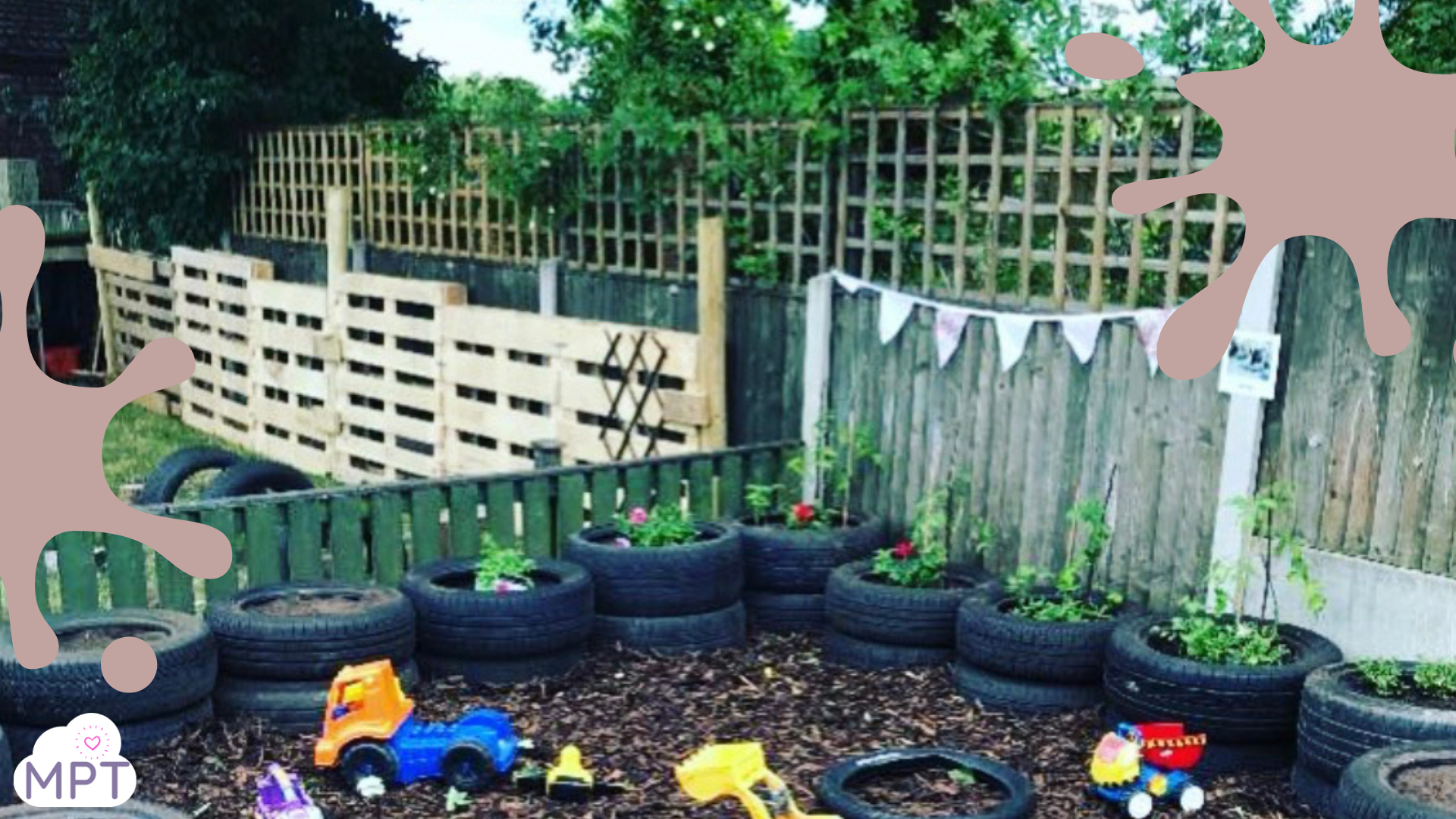
The good news? You do not need a forest, expensive equipment, or hours of planning to get started with our approach. Outdoor learning can happen in a playground, school field, local park, garden, woodland, beach, courtyard or even a small paved area using natural and upcycled materials.
Choose your pathway. This guide supports Primary Schools for other areas. Click on the links below:
– Beginners Guide to Early Years Outdoors
– Beginners Guide to Forest School
– Beginners Guide to SEND Outdoors
– Beginners Guide to Home Settings Outdoors – Parents & Childminders
Or start browsing now by using the search bar at the top of the site to search any curriculum area, topic or need you want to take outside. If you are new to teaching outdoors, read this guide to help you navigate how to set up outdoor lessons and how to make a start.
1. What Is Outdoor Learning?

Outdoor learning means using the outside world as a place to explore, discover, practise and deepen learning.
It is not just “playing outside”, although play is a very important part of it. Outdoor learning can support every area of the curriculum, including:
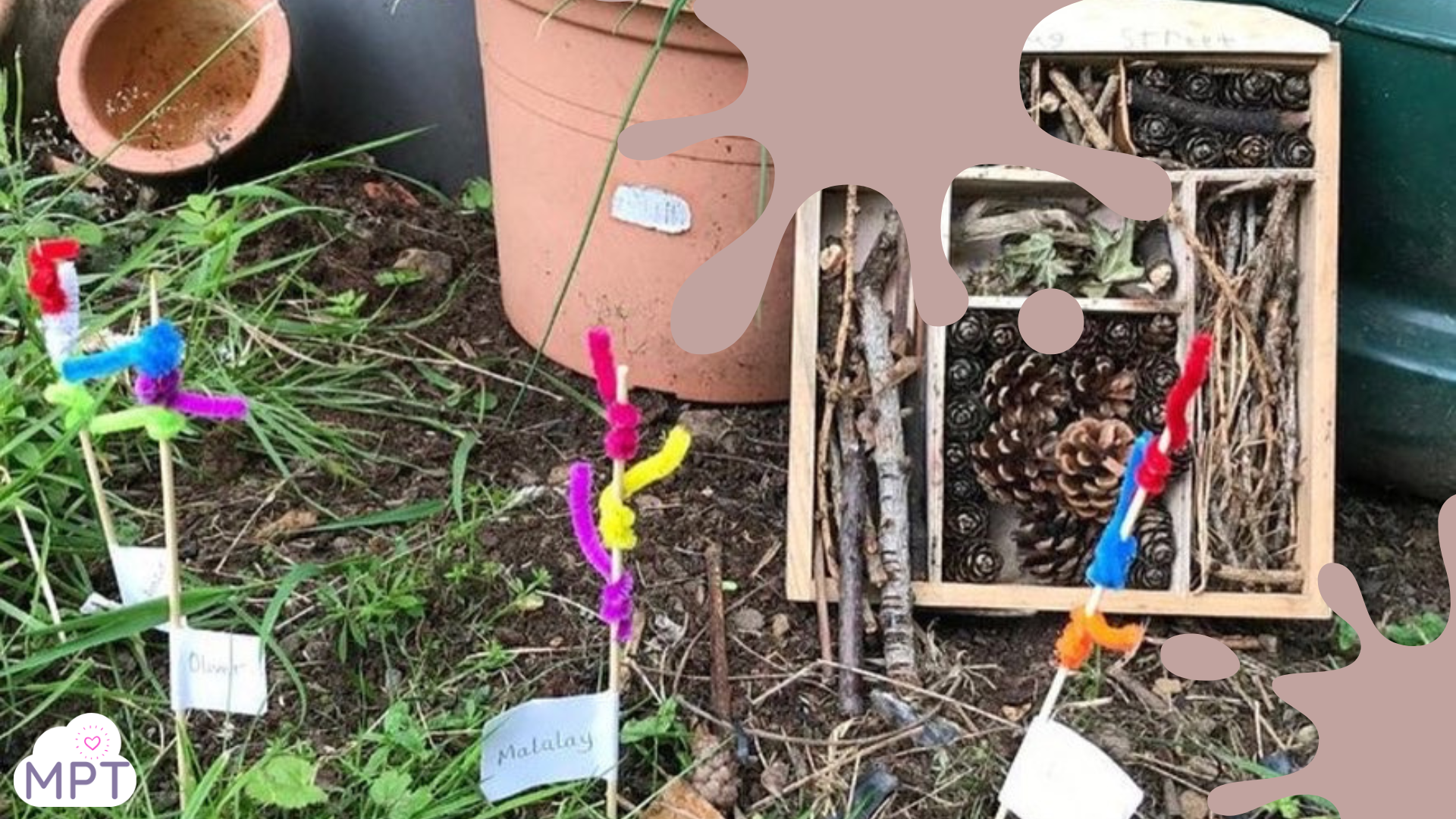
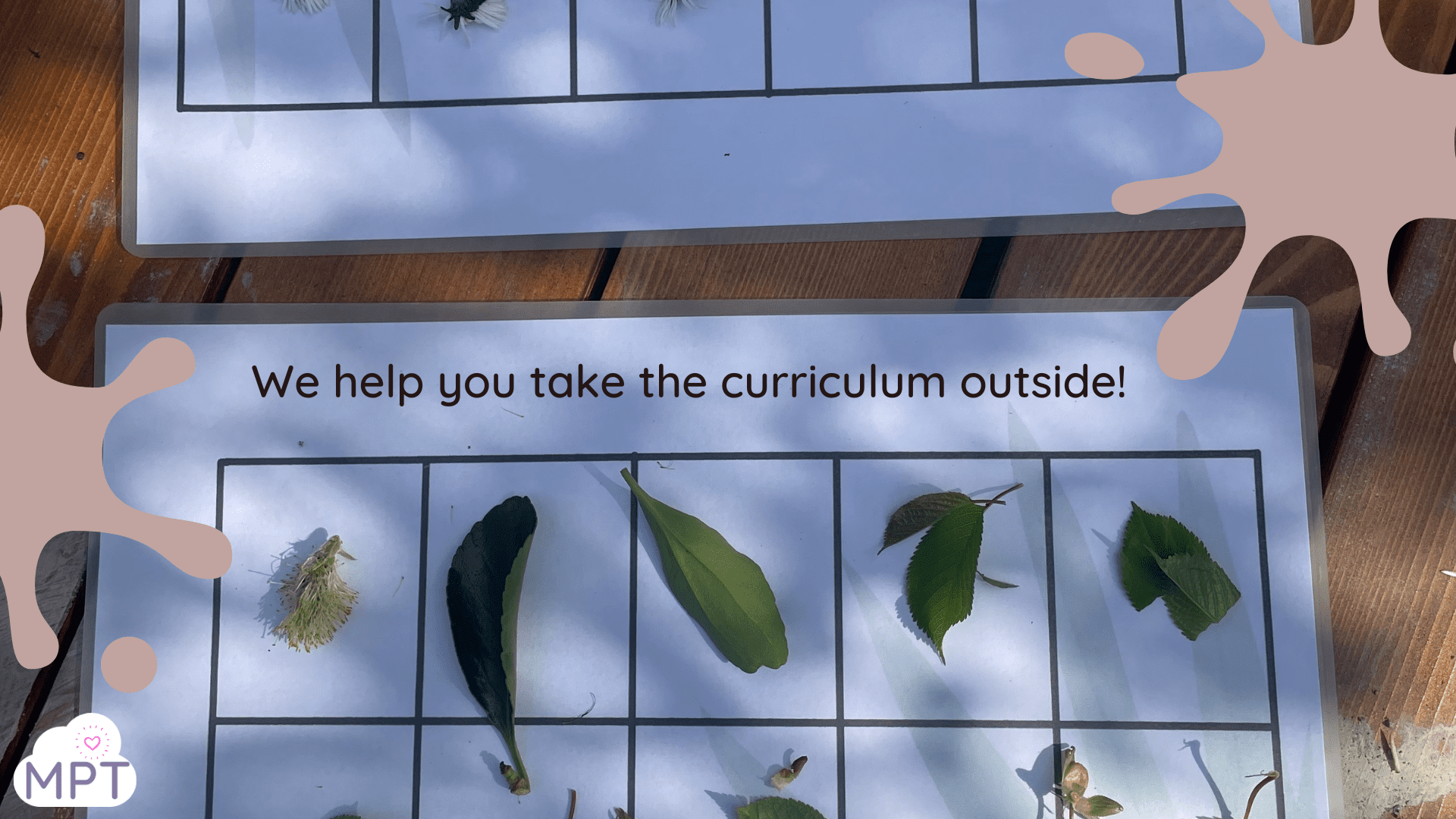
For example, children might collect natural objects to make tens frames, use sticks to form letters to start off writing poetry, investigate minibeasts, make timelines for history using bamboo, create nature art or explore seasonal changes.
Outdoor learning helps children learn through movement, real-life experiences and hands-on discovery. Learn more about the pedagogy behind outdoor learning with this article: The Ultimate Guide to Outdoor Learning.
2. Why Is Outdoor Learning Important?
Children are naturally curious about the world around them. When we take learning outdoors, we give them space to ask questions, solve problems, move their bodies and use their senses.
Outdoor learning can help children:
- Build confidence and independence
- Improve focus and engagement
- Develop communication and teamwork skills
- Strengthen gross and fine motor skills
- Understand nature and the seasons
- Improve physical and mental wellbeing
- Learn through real-life experiences
- Become more creative and imaginative
- Develop resilience and problem-solving skills
For many children, outdoor learning can make tricky concepts easier to understand because they can see, touch, move and experience what they are learning. Head to our Outdoor SEND Hub to get bespoke packs of ideas and interventions to support learners with special needs.

3. Do You Need Special Training to Teach Outdoors?

You do not need to be a forest school leader or outdoor education specialist to start using outdoor learning.
Forest School is a specific approach with its own principles and training. Head to our Forest School Activities Hub to explore resources on this area. Outdoor learning is broader and can be used by any educator who wants to take learning beyond the classroom. At the Muddy Puddle Teacher, we specifically take your curriculum outside, the typical lessons you do inside, and we help you take them outside.
You can start small with simple activities such as:
- Making number lines with chalk and bamboo for addition problems
- Practising phonics games with sports equipment
- Using nature to make sustainable art
- Counting droplets on a rainy day
- Creating active, outdoor, continuous provision
- Exploring loose parts to make active and physical activities
- Acting out a story in the playground using natural materials as props
The most important thing is to begin with confidence and keep activities simple. Use these 50 Outdoor STEM Ideas to help you make a start.
If you want fast-tracking and continued success, try our training, which has 5-stars on Trustpilot. Use the button below to explore face-to- face and online options.
Sign Up For Your FREE Outdoor Learning Magazine

Our free weekly Muddy Puddle Teacher Magazine is a brilliant starting point if you want regular outdoor learning ideas without feeling overwhelmed.
Each week, the magazine shares topical and seasonal inspiration for Early Years, KS1, KS2, Forest School and home settings. It is designed to give you simple ideas you can use in the week ahead, linked to what is happening in the season, the weather, special days, nature, school life and children’s interests.
The magazine is perfect for teachers who want quick outdoor learning ideas, childminders looking for fresh inspiration, parents wanting weekend and holiday activities, home educators planning nature-based learning and Forest School leaders wanting seasonal prompts.
Sign up for the free magazine and start building outdoor learning into your week.
Find a Trained Muddy Puddle School & Nursery Near You
See Our Muddy Puddle Teacher® Trained Schools
We are proud to have trained schools, early years settings and educators across the UK and Europe using The Muddy Puddle Teacher® approach. Explore the map to see just some of the schools and settings who are bringing outdoor learning, play and inclusive teaching to life with us.
From small nurseries to large primary schools, our training helps educators use the outdoors to support curriculum learning, wellbeing, SEND, behaviour, creativity and confidence — whatever the weather.
4. How to Start Outdoor Learning
1. Start With What You Already Have
You do not need a perfect outdoor space. Look at what is already available to you.
This might be:
- A playground
- A field
- A small garden
- A school courtyard
- A local park
- A muddy patch
- A path with trees nearby
- A few planters or pots
- A wall, fence or open area for chalk work
Outdoor learning is about how you use the space, not how big or beautiful the space is. Start now with these 100 Outdoor Learning Ideas you can do today!
2. Choose One Lesson to Take Outside
Do not try to move your whole timetable outdoors straight away. Start with one short activity or one subject you feel confident with.
Good beginner subjects include:
For example, instead of doing a counting activity at a table, ask children to collect ten natural objects and arrange them in different ways. Instead of writing story maps in books, make them outside using chalk and act them out.
Small changes can make a big difference. Involved children learn.
3. Set Clear Expectations
Children need to understand that outdoor learning is still learning. Before you go outside, explain what will happen and what you expect.
You might agree on simple rules such as:
- Stay within the agreed area
- Listen for the stop signal
- Use natural objects safely
- Respect plants and wildlife
- Work together kindly
- Wash your hands after outdoor activities
- Explore our Outdoor Safety Poster for Schools
Keep rules short, positive and easy to remember. To view our safety videos, head to our YouTube Channel: The Muddy Puddle Teacher.
4. Create a Simple Outdoor Learning Kit
A small kit can make outdoor learning easier to organise.
Useful items include:
- Clipboards
- Chalk
- Pencils
- Magnifying glasses
- String
- Measuring tapes
- Small pots or trays
- Whiteboards
- Number cards
- Letter cards
- Tarpaulin or sit mats
- A first aid kit
- Wet wipes or hand sanitiser
You do not need all of these at once. Start with a few basics and build your kit over time. Download our Outdoor Learning Resources Kit List.
5. Easy Outdoor Learning Ideas for Beginners
Outdoor English Ideas
Try these simple literacy activities:
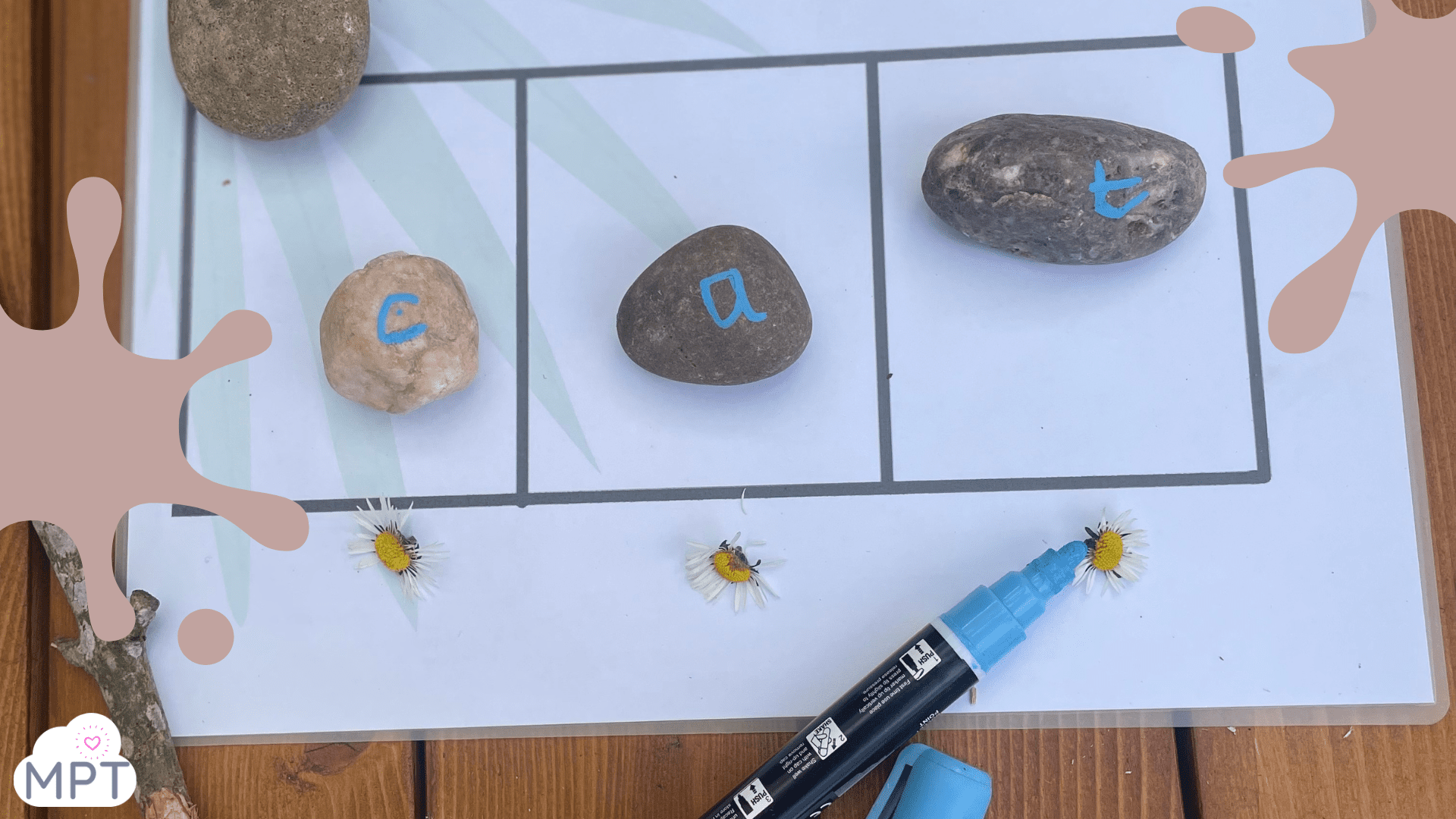
- Make letters using sticks, stones or leaves
- Use cones to write sentences and work on SPAG
- Retell a story using natural props and ropes
- Go on a phase one phonics sound hunt
- Create a story map on the ground using sports kit
- Act out a familiar tale or a diary entry
- Find objects beginning with a chosen sound
- Build a character’s home using colourful ropes
Outdoor English activities are especially useful for children who learn best through movement, talk and imagination. Do not feel you have to take full lessons outside. Sometimes it works really well to help you teach an objective or get ideas for writing. Explore more Outdoor English ideas: Outdoor Literacy for EYFS, KS1 English Outdoors and KS2 English Outdoors
Outdoor Maths Ideas
Maths works brilliantly outside because children can physically move, count, compare and measure.
Try:
- Counting natural objects
- Making repeating patterns with leaves and stones
- Ordering sticks by length
- Creating number lines with chalk
- Measuring puddles
- Sorting objects by size, colour or texture
- Making shapes with sticks
- Looking for symmetry in nature
- Estimating how many steps it takes to cross a space
Outdoor maths helps children see that maths is everywhere. Discover more Outdoor Maths activities: Outdoor Maths for EYFS, Outdoor Maths for KS1, Outdoor Maths for KS2.
Outdoor Science Ideas
The outdoor environment is full of opportunities for scientific thinking.
Children can:
- Observe plants and trees
- Search for minibeasts and microhabitats
- Explore shadows and light
- Investigate weather and create an apparatus
- Compare natural materials such as stones and soil
- Watch seasonal changes in trees and nature
- Test what floats and sinks
- Explore materials in nature
- Discover forces being used outdoors
The outdoors encourages children to ask questions such as, “What do you notice?”, “What has changed?”. Explore more Outdoor Science ideas: Understanding the World Outdoors EYFS, Outdoor Science KS1, Outdoor Science KS2.
Outdoor Art Ideas
Outdoor art allows children to be creative using natural materials and open space.
Try:
- Making leaf pictures
- Creating mud paintings
- Building sculptures with sticks
- Drawing trees, flowers or clouds
- Making natural mandalas
- Creating transient art
- Rubbing bark or leaves
- Mixing natural colours
Outdoor art is particularly good because it focuses on the process rather than a perfect finished product. It also encourages children to focus on the art in nature and protect it by being more sustainable. Dive into more Outdoor Art Ideas: Expressive Arts Outdoors EYFS, Outdoor Art KS1, Outdoor Art KS2.
6. Outdoor Learning in Different Weather
One common worry is the weather. Outdoor learning does not have to stop when the weather changes. In fact, different weather can create wonderful learning opportunities. You have to look at what learning opportunities it offers the children, not what it takes away. However, with our approach, all of our activities can be done in any weather. Here are a few tips to consider.
Sunny Weather
Children can explore shadows, light, warmth, plants and insects.
Rainy Weather
Rain creates opportunities for puddle investigations, water flow, mud play and weather observation. Discover some KS1 Capacity Rainy Day Ideas.
Windy Weather
Children can explore movement, sound, flags, bubbles, kites and natural materials blowing in the wind.
Cold Weather
Children can investigate frost, ice, temperature, winter trees and seasonal changes.
The key is to make sure children are dressed appropriately and activities are safe for the conditions.
6. What Should Children Wear for Outdoor Learning?
Clothing can make a big difference to children’s comfort and confidence outside.
Useful outdoor clothing includes:
- Waterproof coat
- Wellies or sturdy shoes
- Warm layers in colder months
- Hat and gloves in winter
- Sun hat in summer
- Waterproof trousers for muddy play
- Spare socks and clothes when possible
Outdoor learning is much easier when children are allowed to get a little muddy, wet and messy.

7. What Should Children Wear for Outdoor Learning?

One of the biggest secrets to successful outdoor learning is being dressed for the weather, not waiting for the perfect weather.
At The Muddy Puddle Teacher®, we believe children should be able to learn outside in every season. A little rain, wind, mud or sunshine can all become part of the learning experience when children are comfortable and prepared.
For outdoor learning, children should wear clothing that allows them to move freely, explore safely and get a little muddy. Waterproof coats, wellies, hats and gloves are ideal for colder or wetter days. In warmer weather, children may need sun hats, suitable footwear, water bottles and sun protection.
It can help schools to keep a small set of spare outdoor clothing, especially for Early Years and KS1. Families can also be encouraged to send children in practical clothing on planned outdoor learning days.
Outdoor learning does not need expensive kit. The most important thing is that children are warm, dry enough, safe and ready to explore.
For a handy downloadable sheet explore – What to Wear Outdoors – handout for parents.
8. Is Outdoor Learning Safe?
Yes, outdoor learning is safe when it is planned carefully and delivered with clear routines and expectations.
Outdoor learning does not mean letting children run freely without structure. It means using the outdoor space as a purposeful learning environment. At The Muddy Puddle Teacher®, we encourage schools to create simple safety routines so children know how to move, listen, explore and return to the group.
Before taking learning outside, staff should check the area, remove obvious hazards, set clear boundaries and explain the activity carefully. Children should understand where they can go, what they can touch and how to ask for help.
Outdoor learning can actually help children become safer and more confident because they learn how to manage real-world risks in an age-appropriate way. They practise balance, coordination, awareness, teamwork and decision-making.
With sensible planning, clear expectations and adult supervision, outdoor learning can be a safe, positive and powerful part of school life. Download the Outdoor safety Poster.

9. How Often Should You Do Outdoor Learning?

Outdoor learning works best when it becomes a regular part of the week rather than a one-off treat.
You do not need to take every lesson outside or spend hours planning complicated activities. Even ten to twenty minutes outdoors can make a big difference to children’s engagement, wellbeing and understanding.
For beginners, we recommend starting small. Try one outdoor learning activity each week, then build confidence from there. This could be a maths warm-up, a phonics hunt, a science observation, a storytelling circle or a wellbeing walk.
Some schools choose a regular outdoor learning slot. Others weave outdoor learning into different subjects across the week. There is no single correct approach. The key is consistency.
The Muddy Puddle Teacher® Approach is all about making outdoor learning manageable, curriculum-linked and realistic for busy teachers. Little and often is much better than waiting for the perfect day.
10. Outdoor Learning for Early Years
Outdoor learning is a natural fit for Early Years because young children learn best through movement, play, curiosity and hands-on exploration.
In EYFS, the outdoor environment can support every area of learning. Children can count conkers, make marks in mud, retell stories with sticks, explore water, investigate insects, build dens, create nature art and develop language through real experiences.
Outdoor learning also supports physical development, communication, confidence, independence and wellbeing. It gives children space to take turns, solve problems, ask questions and follow their own interests.
At The Muddy Puddle Teacher®, we encourage Early Years practitioners to see the outdoors as an extension of the classroom. You do not need a forest, field or huge playground. A small outdoor area, a few natural resources and a playful approach can create rich learning opportunities.
The best Early Years outdoor learning is simple, child-led and full of wonder.

11. Outdoor Learning for Primary Schools

Outdoor learning in primary schools can support the whole curriculum, from maths and English to science, geography, history, art, PSHE and PE.
For KS1 and KS2 pupils, learning outside helps make abstract ideas more concrete. Children can measure real objects, act out historical events, explore habitats, collect data, create maps, build vocabulary and solve practical problems together.
Outdoor learning can also improve teamwork, resilience, communication and wellbeing. It gives children a chance to move, talk and learn in a different way, which can be especially powerful for pupils who find sitting still or working on paper challenging.
The Muddy Puddle Teacher® Approach helps schools take learning outside without adding extra pressure to teachers. Activities can be linked directly to existing objectives and taught using simple natural or upcycled resources.
Outdoor learning is not an extra subject. It is a way of teaching the curriculum more actively, creatively and memorably.
12. Outdoor Learning FAQ’s
What is outdoor learning?
Outdoor learning is any learning experience that takes place outside the classroom. It can include curriculum lessons, play-based activities, nature exploration, wellbeing sessions, investigations, teamwork challenges and practical problem-solving. Find Top 100 Outdoor Learning Ideas to help you make a start.
Do you need a forest for outdoor learning?
No, you do not need a forest. Outdoor learning can happen in a playground, school field, garden, courtyard, path, local park or small outdoor area. The Muddy Puddle Teacher® Approach focuses on using the space you already have. For specific Forest School Training explore our Outdoor Learning Training Hub.
Is outdoor learning just for Early Years?
No. Outdoor learning is valuable for EYFS, KS1 and KS2. Younger children benefit from play and exploration, while older pupils can use outdoor learning for problem-solving, investigation, teamwork and deeper curriculum understanding.
What subjects can be taught outdoors?
Almost every subject can be taught outdoors, including maths, English, phonics, science, geography, history, art, PSHE and PE. Outdoor learning is a teaching approach, not a separate subject.
What if the weather is bad?
Outdoor learning can still happen in many types of weather if children are dressed appropriately and the activity is safe. Rain, wind, mud and seasonal changes can all become part of the learning. However, outdoor learning should be adapted or moved indoors during unsafe weather conditions.
How do I manage behaviour outside?
Set clear routines before leaving the classroom. Explain boundaries, expectations, stop signals and the purpose of the activity. Start with short, structured tasks and build up children’s confidence over time.
Do I need lots of resources?
No. Many outdoor learning activities use simple natural or upcycled resources such as sticks, leaves, stones, chalk, water, recycled containers and clipboards. The Muddy Puddle Teacher® Approach is designed to be low-cost and practical.
How often should children learn outside?
Outdoor learning is most effective when it happens regularly. This could be once a week, several short sessions across the week or whenever it naturally supports the curriculum. Little and often works well.
Can outdoor learning support wellbeing?
Yes. Outdoor learning can support children’s wellbeing by giving them fresh air, movement, space, sensory experiences and opportunities to connect with nature. It can also help build confidence, resilience and teamwork.
How can I start outdoor learning as a beginner?
Start with one simple activity linked to something you are already teaching. Keep it short, set clear expectations and use resources you already have. As your confidence grows, outdoor learning will become easier and more natural.