
a

Training & Resources

muddy puddle teacher logo

The Muddy Puddle Teacher ®

Leading with Outdoor Learning and Outdoor Play

Home 9 Forest School 9 Forest School Scavenger Hunt
Forest School Scavenger Hunt

Forest School Scavenger Hunt

Download

Outdoor Learning, EYFS and KS1

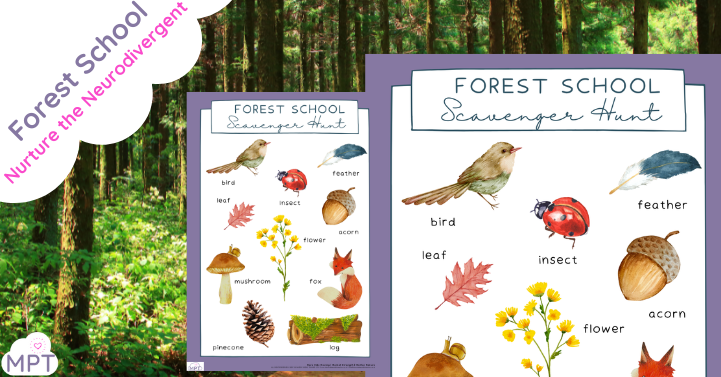
Looking for a simple Forest School scavenger hunt to help children explore nature, notice seasonal changes and enjoy outdoor learning? This ready-to-use resource gives teachers, early years practitioners, childminders and outdoor learning leads an easy way to get children looking, listening, moving and talking outside. If you are new to this area or would like to know more about how we approach Forest School, explore the Beginners’ Guide to Forest School. 

This resource is ideal for:

  • forest school scavenger hunts
  • outdoor learning activities
  • EYFS outdoor learning
  • KS1 forest school activities
  • nature scavenger hunts
  • school garden activities
  • woodland learning
  • outdoor science
  • SEND-friendly outdoor learning
  • nurture groups and wellbeing sessions

It gives children a fun, purposeful reason to slow down, notice nature and connect with the world around them. Ready to make a start? Download this resource, created by Level 3 Forest School Leaders and thousands more with our 60-day free trial. 

What is a Forest School Scavenger Hunt?

A Forest School scavenger hunt is a simple outdoor learning activity where children search for natural objects, colours, textures, sounds or signs of nature.

Instead of just walking outside, children have a clear focus. They are encouraged to look closely, ask questions, compare what they find and talk about the natural world.

A scavenger hunt can support:

  • observation skills
  • vocabulary development
  • outdoor science
  • speaking and listening
  • teamwork
  • curiosity
  • sensory exploration
  • confidence outdoors
  • connection with nature

The full downloadable resource gives you a ready-to-use scavenger hunt so you can take children outside without needing to plan from scratch. For more Forest School Lesson Plans head to the Forest School Hub. 

New to Forest School? Start Here

If forest school feels overwhelming, start with something simple and structured.

A scavenger hunt is a brilliant first activity because it gives children a clear purpose while still allowing them to explore.

You do not need a woodland or lots of equipment. You can use:

  1. A playground
  2. A school garden
  3. A field, park, courtyard or small outdoor space

The aim is not to find everything perfectly.
The aim is to help children notice, wonder and enjoy being outdoors.

Try This Tomorrow

If you only do one thing, try a simple nature noticing hunt.

Ask children to find one thing that is:

  • soft
  • rough
  • green
  • tiny
  • moving

Time: 10–15 minutes
Prep: Very low
Best for: outdoor learning, vocabulary, observation, sensory play and nature connection

This is a quick starting point. The full Forest School Scavenger Hunt resource gives children a clearer structure and ready-made prompts to follow outdoors.

Why Scavenger Hunts Work So Well Outdoors

Children often engage more deeply when they have something to search for.

A forest school scavenger hunt gives outdoor learning a clear focus, but still allows children to move, explore and follow their curiosity.

Scavenger hunts can help children:

  • slow down and look carefully
  • notice small details in nature
  • use descriptive language
  • compare objects and textures
  • work with a partner or group
  • build confidence outdoors
  • develop respect for nature
  • learn through movement and play

They are also easy to adapt for different ages, seasons and spaces.

Gain some specific ideas for Year 6 boys

Forest School Scavenger Hunt Ideas

A nature scavenger hunt can be used in many different ways depending on your outdoor space and the children you are working with.

You might focus on:

  • colours in nature
  • textures outdoors
  • signs of the season
  • minibeasts and habitats
  • leaves, sticks and natural objects
  • sounds in the environment
  • things that move
  • things that feel calm or interesting

The downloadable Forest School Scavenger Hunt resource gives you ready-made prompts so you do not have to create the activity yourself.

Outdoor Learning Without Lots of Equipment

One of the best things about a forest school scavenger hunt is that it can be low-prep and low-cost.

You do not need expensive resources. You can begin with:

  • a printed scavenger hunt sheet
  • clipboards
  • pencils or crayons
  • picture prompts
  • a safe outdoor space
  • natural objects already around you

Children can record what they find by ticking, drawing, pointing, collecting, talking, photographing or sharing with an adult.

Forest School Scavenger Hunts for EYFS

For EYFS children, scavenger hunts are a brilliant way to support communication, curiosity and early understanding of the world.

They can help children:

  • name natural objects
  • notice colours and textures
  • practise listening
  • follow simple instructions
  • build vocabulary
  • talk about what they find
  • explore safely with an adult
  • develop confidence outdoors

For younger children, keep the hunt short, visual and playful. The focus should be on noticing and talking, not completing every box.

Forest School Scavenger Hunts for KS1

For KS1 children, scavenger hunts can link beautifully to science, geography, English and wellbeing.

Children can begin to think more deeply about:

  • habitats
  • seasonal change
  • plants and trees
  • living things
  • weather
  • materials
  • maps and routes
  • descriptive language
  • comparing and classifying

A scavenger hunt gives KS1 children a purposeful reason to observe the world closely and use outdoor learning as part of the curriculum.

Forest School Scavenger Hunts for SEND

Scavenger hunts can be very SEND-friendly when they are simple, visual and flexible.

Children can take part by:

  • pointing
  • choosing
  • matching
  • drawing
  • collecting
  • using symbols
  • working with a trusted adult
  • taking photographs
  • using gesture or eye gaze
  • responding through movement or sensory exploration

You can adapt the hunt by reducing the number of items, offering picture prompts, using a calm outdoor space or focusing on sensory experiences rather than written recording.

This makes the resource useful for children with autism, ADHD, speech and language needs, sensory processing needs, anxiety or children who find classroom learning difficult.

Linking a Scavenger Hunt to the Curriculum

A Forest School scavenger hunt might feel simple, but it can support lots of learning.

It can link to:

  • science: plants, animals, habitats, seasons and materials
  • English: vocabulary, describing, speaking and listening
  • maths: sorting, counting, comparing and pattern spotting
  • geography: routes, places, maps and local environments
  • PSHE: teamwork, confidence, wellbeing and respect
  • art: colour, texture, shape and natural patterns

This makes it a useful outdoor learning activity for busy teachers who want something practical but meaningful.

When Can You Use a Forest School Scavenger Hunt?

You can use this resource:

  • at the start of a forest school session
  • as an outdoor learning warm-up
  • during a science topic
  • as part of a nature club
  • during nurture or wellbeing sessions
  • for seasonal outdoor learning
  • with mixed-age groups
  • as a transition activity
  • for outdoor continuous provision
  • as a simple lesson outdoors

It works well because it gives children structure while still allowing freedom to explore.

Making Outdoor Learning Feel Manageable

Many teachers want to take children outside more often but worry about planning, behaviour, weather or not knowing what to do.

A scavenger hunt helps because it is:

  • easy to explain
  • quick to set up
  • flexible
  • purposeful
  • curriculum-friendly
  • suitable for different outdoor spaces
  • simple to repeat in different seasons

It is a lovely way to build teacher confidence with outdoor learning.

Want Ready-to-Use Forest School Resources?

The Muddy Puddle Teacher Club helps busy teachers, early years teams and outdoor learning leads save planning time with:

✅ ready-to-use outdoor learning resources
✅ forest school scavenger hunts
✅ EYFS and KS1 nature activities
✅ SEND-friendly outdoor resources
✅ seasonal outdoor learning ideas
✅ simple resources you can use straight away

Ready to make a start? Download this resource, created by Level 3 Forest School Leaders and thousands more with our 60-day free trial. 

Download the Forest School Scavenger Hunt

If you want a simple, ready-to-use outdoor activity, the Forest School Scavenger Hunt is a brilliant place to start.

It helps children explore nature, notice seasonal changes, build vocabulary, practise observation skills and enjoy learning outdoors.

Ready to make a start? Download this resource, created by Level 3 Forest School Leaders and thousands more with our 60-day free trial. 

For more campfire ideas, try these Around The World Cooking ideas for Forest School. 

FAQs

What is a Forest School scavenger hunt?

A Forest School scavenger hunt is an outdoor learning activity where children search for natural objects, colours, textures, sounds or signs of nature. It helps children observe, explore and talk about the natural world.

What can children look for on a nature scavenger hunt?

Children might look for leaves, sticks, stones, flowers, seeds, insects, textures, colours, sounds, weather signs or seasonal changes. The full resource gives children ready-made prompts to follow.

Is a scavenger hunt good for outdoor learning?

Yes. A scavenger hunt is a simple and effective outdoor learning activity because it supports observation, vocabulary, curiosity, movement, teamwork and nature connection.

Can I use a Forest School scavenger hunt with EYFS?

Yes. Scavenger hunts are ideal for EYFS because they support communication, listening, curiosity, understanding the world, sensory exploration and outdoor play.

Can this be used with KS1?

Yes. A Forest School scavenger hunt works well for KS1 and can link to science, English, geography, maths, PSHE and seasonal learning.

Do I need a woodland area?

No. You can use a playground, garden, field, courtyard, school path, outdoor shelter, park or small nature area. The activity can be adapted to whatever outdoor space you have.

Is this resource suitable for SEND children?

Yes. Scavenger hunts can be adapted for children with SEND using visual prompts, adult support, fewer items, sensory choices, pointing, matching, photographs or communication aids.

Do children need to write during a scavenger hunt?

No. Children can tick, draw, point, photograph, collect, talk, match or show what they have found. Writing can be added afterwards if appropriate.

When should I use a Forest School scavenger hunt?

You can use it as a forest school starter, outdoor learning lesson, nature club activity, science activity, nurture group task, transition activity or seasonal outdoor learning resource.

You need a subscription to download this file. Log in/Upgrade or Take a 60 Day Free Trial. Feel free to Send us a message if you need help.

New in