
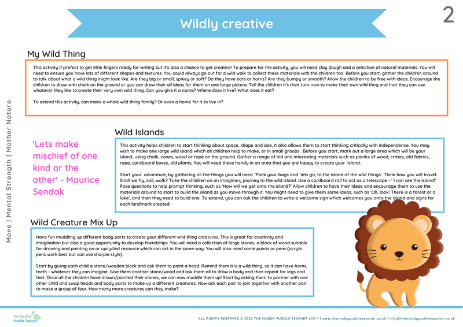
EYFS Wild Things Outdoor Activities
Looking for simple EYFS Wild Things activities? A Wild Things theme is brilliant for Early Years because it supports imagination, storytelling, movement, emotional expression, role-play, communication, mark-making and creative outdoor play. New to Early Years Outdoor Learning? Use this handbook to help explain the Beginners Guide to Early Years Outdoors.
Taking Wild Things outdoors gives children space to roar, stomp, build dens, create wild lands, move their bodies and explore big feelings through playful learning. These ideas are low-prep, active and ideal for Nursery and Reception children.
Make a start and download now with a 60-day free trial.
New to Outdoor Story-Themed Learning? Start Here
If outdoor learning feels overwhelming, start small.
Try:
One 10-minute wild movement activity
One outdoor story trail
One simple creative task using sticks, leaves, chalk or loose parts
You do not need expensive resources. You can use:
chalk
hoops
cones
sticks
stones
leaves
logs
fabric
crates
cardboard
clipboards
story cards
masks
natural loose parts
large paper
The aim is not to create a perfect themed lesson. The aim is to help children move, imagine, talk, build, express feelings and learn through playful outdoor experiences.
Wild Things activities can support:
communication and language
physical development
PSED
storytelling
emotional literacy
mark-making
imaginative play
teamwork
creative thinking
outdoor learning confidence
- https://themuddypuddleteacher.co.uk/outdoor-play-lets-play-emergency-services/
Try This Tomorrow
If you only do one thing, try this:
Wild Thing Movement Trail
Create a simple trail outdoors using chalk arrows, hoops, cones or natural markers.
At each stop, children move like a Wild Thing.
Try:
stomp like a Wild Thing
tiptoe through the forest
roar to the sky
crawl through the cave
jump over the river
freeze like a statue
stretch tall like a tree
curl up and rest
Time: 10–15 minutes
Prep: Low
Learning: Gross motor skills, listening, imagination, vocabulary and emotional expression
This is a brilliant quick win because children can instantly join in through movement, sound and pretend play.
EYFS Wild Things Outdoor Activity Ideas
1. Build a Wild Thing Den
Invite children to build a den, cave or home for a Wild Thing.
They could use:
sticks
leaves
logs
crates
fabric
cardboard
stones
bark
natural loose parts
Ask:
Where does your Wild Thing sleep?
What does it need to feel safe?
Is the den big or small?
How can we make it cosy?
Who lives inside?
This supports construction, problem-solving, communication, teamwork and imaginative play.
You can also link this to PSED by asking:
“What helps you feel safe and calm?”
2. Wild Thing Feelings Faces
Use natural materials to create Wild Thing faces outdoors.
Children could use:
stones for eyes
sticks for mouths
leaves for hair
petals for cheeks
bark for eyebrows
mud or chalk for marks
Ask children to create different feelings:
happy
sad
cross
worried
excited
calm
tired
brave
Ask:
How does your Wild Thing feel?
How do you know?
What might help your Wild Thing feel better?
Can you make a calm Wild Thing?
This supports emotional literacy, communication, creativity and PSED.
3. Wild Rumpus Music and Movement
Create a simple outdoor Wild Rumpus using body percussion, natural sounds and movement.
Children can:
stomp feet
clap hands
tap sticks together
shake leaves
drum on logs
swish fabric
roar quietly or loudly
move fast and slow
Explore vocabulary such as:
loud
quiet
fast
slow
wild
calm
heavy
gentle
This supports rhythm, listening, self-regulation, physical development and expressive arts.
End with a calm moment:
“The Wild Things are tired. Let’s breathe and rest.”
4. Wild Thing Mark-Making Outdoors
Use the theme to give children a playful reason to make marks.
Children could create:
Wild Thing footprints
signs for the wild forest
maps to the Wild Thing island
labels for dens
speech bubbles
feeling words
danger signs
invitations to the Wild Rumpus
Use chalk, clipboards, large paper, cardboard, sticks in mud or water painting.
You could say:
“The Wild Things need signs so everyone knows where to go.”
This gives early writing and mark-making a clear purpose.
5. Create a Wild Thing Island
Invite children to create a small world Wild Thing island using loose parts and natural materials.
They could use:
leaves for forests
stones for mountains
sticks for bridges
mud for swamps
fabric for rivers
bark for boats
logs for caves
chalk for paths
Add small figures, toy animals or child-made Wild Things if you have them.
Ask:
Where is the forest?
How do you get to the island?
Who lives there?
What happens in the story?
How does the Wild Thing get home?
This supports storytelling, sequencing, imagination and language development.
Wild Things Activity for SEND Support
Calm Wild Thing Tray
Set up a quieter outdoor Wild Thing tray with a small number of natural objects.
You could include:
one stick
one stone
one leaf
one piece of bark
one small figure or picture card
one feelings card
one small tray or mat
Children can:
build a small Wild Thing face
choose a feeling
match objects
make a tiny den
move a figure through a simple story
point to how the Wild Thing feels
Use short, clear prompts:
“Choose one.”
“Make a face.”
“How does it feel?”
“Happy or sad?”
“Calm or cross?”
“What helps?”
This can support:
sensory regulation
emotional communication
confidence
focus
fine motor skills
predictable routines
storytelling
shared attention
Children can respond through speech, gesture, pointing, symbols, facial expression, movement or arranging objects.
Why Use Wild Things Outdoors?
Wild Things themes work brilliantly outdoors because children can explore imagination and emotions through their whole bodies.
Outdoor Wild Things activities can help children:
express big feelings safely
move their bodies
develop story language
build confidence
practise self-regulation
create characters
work with others
use natural materials imaginatively
make purposeful marks
explore wild and calm moments
Outdoor learning gives children space to be expressive while still building language, listening and early learning skills. Make a start and download now with a 60-day free trial.
Useful EYFS Vocabulary
You can model and repeat key words during Wild Things activities.
Try:
wild
calm
roar
stomp
tiptoe
cave
forest
island
den
safe
brave
cross
happy
sad
worried
excited
loud
quiet
fast
slow
under
over
through
around
Repeated vocabulary helps children join in, retell ideas and build confidence with language.
Want Ready-to-Teach EYFS Outdoor Learning Resources?
The Muddy Puddle Teacher Club helps busy teachers save planning time with:
ready-to-use EYFS outdoor activities
story-linked outdoor learning ideas
PSED and emotional literacy resources
outdoor mark-making activities
SEND-friendly ideas
seasonal and topic-based planning
simple ways to take learning outside
Make a start and download now with a 60-day free trial.
Outdoor Play Lanyards : Let’s Play Unicorns (Lanyards)
FAQs
What are good EYFS Wild Things activities?
Good EYFS Wild Things activities include movement trails, den building, Wild Thing faces, outdoor mark-making, Wild Rumpus music, small world islands and feelings-based outdoor play.
How can I teach a Wild Things theme outdoors?
You can teach a Wild Things theme outdoors through storytelling, movement, role-play, den building, natural loose parts, sound-making, mark-making and emotional literacy activities.
What EYFS areas of learning do Wild Things activities support?
Wild Things activities can support communication and language, physical development, PSED, literacy, maths, understanding the world and expressive arts and design.
How can Wild Things activities support PSED?
Wild Things activities can support PSED by helping children explore feelings such as anger, excitement, worry, bravery and calm. Children can use characters and role-play to talk about emotions in a safe way.
Are Wild Things activities good for outdoor mark-making?
Yes. Children can create footprints, maps, signs, labels, speech bubbles, feeling words and story marks linked to the Wild Things theme.
Can Wild Things activities support SEND learners?
Yes. Wild Things activities can be adapted with calm trays, visual prompts, feelings cards, sensory materials, simple choices, repeated routines and short instructions.
What resources do I need for EYFS Wild Things outdoor activities?
Useful resources include chalk, hoops, cones, sticks, stones, leaves, logs, fabric, crates, cardboard, clipboards, feelings cards, story cards and natural loose parts.
How do I keep Wild Things activities calm and manageable?
Use clear boundaries, short activities, simple instructions and a calm ending. You can move from wild movement into breathing, resting, quiet observation or a calm nature tray.
How does Wild Things link to outdoor learning?
Wild Things links to outdoor learning because it encourages children to move, build, explore, imagine, create and communicate using outdoor spaces and natural materials.
Ready for More EYFS Outdoor Learning Ideas?
If you want more simple, curriculum-linked outdoor learning ideas for Early Years, join The Muddy Puddle Teacher Club.
Make a start and download now with a 60-day free trial.