
a

Training & Resources

muddy puddle teacher logo

The Muddy Puddle Teacher ®

Leading with Outdoor Learning and Outdoor Play

Home 9 Outdoor EBooks 9 Nature Treasure Hunt eBook
nature treasure hunt

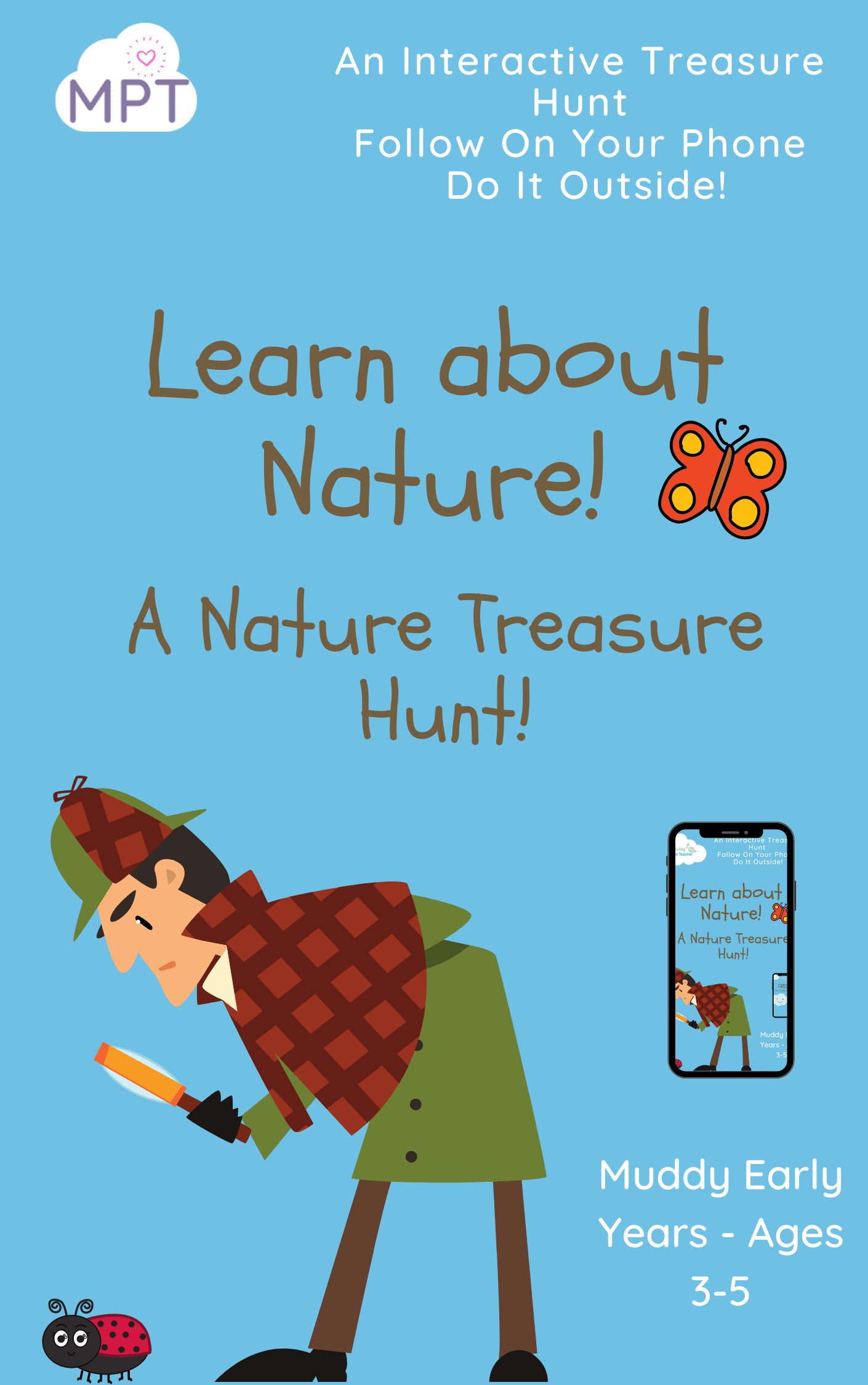
Nature Treasure Hunt eBook

Download

Nature Treasure Hunt eBook: Outdoor Treasure Hunt Ideas for Children

Looking for a simple and exciting nature treasure hunt for children? A nature treasure hunt is one of the easiest ways to get children outdoors, moving, talking and noticing the world around them. New to Outdoor Learning? Explore the Beginners Guide to Outdoor Learning. 

Whether you are a teacher, nursery practitioner, childminder, parent or home educator, a Nature Treasure Hunt eBookcan help you create meaningful outdoor learning without needing lots of equipment or complicated planning.

At The Muddy Puddle Teacher®, we believe outdoor learning should be simple, joyful and easy to use. A nature treasure hunt gives children a reason to explore, observe, collect, count, describe and connect with nature.

You can use a nature treasure hunt in a school playground, nursery garden, forest school area, local park, woodland, field, backyard or even a small outdoor space. Children do not need a perfect outdoor area to begin. They just need a safe space, a simple prompt and time to explore. Start downloading early years outdoor resources. Take a 60-day free trial. 


What Is a Nature Treasure Hunt?

A nature treasure hunt is an outdoor activity where children search for natural objects, colours, textures, sounds or signs of the season. Instead of looking for plastic prizes or hidden toys, children search for the treasures already found in nature.

These might include leaves, petals, feathers, sticks, stones, pine cones, seeds, bark, flowers, shadows, minibeasts, birdsong or signs of weather.

A nature treasure hunt helps children slow down and notice small details. It encourages them to look closely, ask questions and talk about what they find.

Children often love treasure hunts because they feel purposeful and playful. They are not just walking around outside; they have a mission. This makes nature treasure hunts especially useful for children who need a little structure to engage with outdoor learning. Start downloading early years outdoor resources. Take a 60-day free trial. 


Why Nature Treasure Hunts Are Brilliant for Outdoor Learning

Nature treasure hunts are simple, low-cost and flexible. They can be used with nursery children, EYFS, Reception, KS1, KS2, SEND groups, forest school sessions, families, childminders and home educators.

A nature treasure hunt can support communication and language, early maths, observation skills, teamwork, sensory exploration, physical development, wellbeing, confidence, science, literacy and nature connection.

Children can count what they find, describe textures, compare sizes, sort colours, follow clues, draw objects, write labels, create maps or talk about seasonal changes.

For children who find indoor learning difficult, a nature treasure hunt can be a gentle way to access learning through movement and curiosity. It can also be calming and regulating because children are outside, using their senses and focusing on real objects.

At The Muddy Puddle Teacher®, we love activities that work across ages and abilities. A nature treasure hunt is one of those activities. You can make it as simple or as challenging as you need. For more Outdoor Lesson Ideas, discover the Outdoor Learning Hub.


Nature Treasure Hunt Ideas for EYFS

For nursery, preschool and Reception children, keep your nature treasure hunt visual, sensory and playful. Young children do not need long written instructions. They need simple prompts, picture cards and lots of time to explore.

You could ask children to find something soft, something rough, something green, something tiny, something round, something that smells nice, something that moves in the wind or something that makes a sound.

Children might collect leaves, sticks, feathers, petals, pebbles or seed pods. You could give them a small basket, tray or hoop to place their treasures in.

Adults can support learning by modelling language:

“This leaf is smooth.”
“You found a tiny stone.”
“The feather is soft.”
“This stick is longer than that one.”
“You found three petals.”

This turns a simple treasure hunt into rich outdoor learning.

A nature treasure hunt is also brilliant for early maths. Children can count treasures, sort by colour, compare sizes, make patterns or match objects to number cards.


Nature Treasure Hunt Ideas for KS1

For KS1 children, a nature treasure hunt can include more reading, counting, sorting and recording.

Children can use a simple checklist or challenge card. They might look for five green objects, four different leaves, three rough textures, two signs of wildlife and one object that makes them feel happy.

You can link the treasure hunt to maths by asking children to count, compare, estimate and create number sentences using their natural finds.

For example:

4 leaves + 3 sticks = 7 natural objects
10 stones – 2 stones = 8 stones
2 groups of 5 petals = 10 petals

You can also link the activity to literacy by asking children to write labels, adjectives or simple sentences about what they find.

For example:

The leaf is soft.
The stick is long.
The stone is smooth.
The flower is yellow.

This makes a nature treasure hunt a practical and meaningful way to support both English and maths outdoors.


Nature Treasure Hunt Ideas for KS2

For KS2 children, a nature treasure hunt can become more investigative and curriculum-linked. Older children enjoy challenge, independence and opportunities to explain their thinking.

You could ask children to search for natural symmetry, evidence of seasonal change, signs of habitats, different seed types, examples of erosion, natural patterns, textures, food chains or objects that could inspire descriptive writing.

Children could work in teams to complete a challenge-based nature trail. They might record their findings in a table, sketch objects, create a map, take photographs or write clues for another group.

A KS2 nature treasure hunt could include:

finding three examples of symmetry in nature, collecting data on leaf shapes, identifying habitats, comparing natural textures, writing metaphor and simile phrases, measuring natural objects, mapping a route or creating classification groups.

This helps older children understand that outdoor learning is not just for younger children. Nature can support deeper thinking, scientific enquiry, vocabulary, problem-solving and creativity. Start downloading early years outdoor resources. Take a 60-day free trial. 


Nature Treasure Hunts for SEND and Wellbeing

Nature treasure hunts can be especially powerful for children with SEND, anxiety, sensory needs or social and emotional challenges.

The activity can be adapted to suit different needs. Some children may prefer to work alone. Some may need picture prompts. Some may enjoy sensory objects. Others may benefit from a quiet, predictable route.

You can make the activity calming by asking children to find:

something soft, something smooth, something that smells nice, something that feels cool, something that moves gently, something that makes them feel peaceful.

Nature treasure hunts can support self-regulation because children are using their senses, moving their bodies and focusing on the natural environment.

They also give children a sense of success. Every child can find something. Every child can contribute. Every child can notice nature in their own way. For more Outdoor Lesson Ideas, discover the Outdoor Learning Hub.


How to Set Up a Nature Treasure Hunt

Start by choosing a safe outdoor space. Walk the area first and decide where children can explore. Set clear boundaries and think about supervision, weather, clothing and accessibility.

Next, choose how children will record their findings. They could collect objects in a basket, tick off a checklist, take photographs, draw what they find, place treasures in a hoop or talk about them with an adult.

You might use:

baskets, trays, clipboards, chalk, hoops, picture cards, pencils, magnifying glasses, small pots, fabric squares or reusable treasure hunt cards.

Keep it sustainable. Encourage children to collect only fallen natural objects where possible. Talk about respecting plants, minibeasts and habitats. At the end of the session, treasures can be returned to nature, used for art, sorted into groups or explored through storytelling.

A nature treasure hunt should feel joyful, not rushed. Give children time to notice, wonder and talk.


Simple Nature Treasure Hunt Prompts

Here are some simple prompts you can use with children:

Find something green, find something soft, find something rough, find something tiny, find something long, find something round, find something that smells nice, find something that moves in the wind, find something a bird might use, find something with a pattern, find something that makes you smile.

You can adapt these prompts for different ages.

For younger children, keep them sensory and visual.

For older children, add challenge:

Can you explain why you chose it?
Can you sort your treasures into groups?
Can you write three adjectives?
Can you measure your longest object?
Can you create a poem from your treasures?
Can you make a map of where you found them?

These simple prompts can lead to rich outdoor learning across the curriculum.

Looking for Easter Treasure Hunt Ideas?

Outdoor Easter Treasure Hunt


Nature Treasure Hunts Through the Seasons

A nature treasure hunt can be used all year round.

In spring, children might look for blossom, buds, petals, birds, nests, green shoots and signs of new life.

In summer, they might search for flowers, bees, butterflies, shadows, dry grass, seed heads and different leaf shapes.

In autumn, they might collect colourful leaves, conkers, acorns, pine cones, seed pods and crunchy textures.

In winter, they might notice bare branches, frost, ice, evergreen leaves, animal tracks, mud patterns and changes in light.

This makes nature treasure hunts a brilliant way to help children understand seasonal change. Children can repeat the same treasure hunt at different times of the year and compare what they find.


Download the Nature Treasure Hunt eBook

If you would like ready-made nature treasure hunt ideas, outdoor prompts and simple activities to use with children, our Nature Treasure Hunt eBook is designed to help you get started quickly.

It is ideal for teachers, nurseries, childminders, home educators and parents who want simple outdoor learning ideas that do not require lots of preparation.

Use it for outdoor learning lessons, forest school sessions, nature clubs, wellbeing sessions, playtimes, home learning, holiday activities or seasonal outdoor play.

The Nature Treasure Hunt eBook helps children explore the outdoors with curiosity, confidence and joy. For more Outdoor Lesson Ideas, discover the Outdoor Learning Hub.


Try The Muddy Puddle Teacher® Free Trial

Need more simple outdoor learning ideas?

Join The Muddy Puddle Teacher® and access hundreds of outdoor learning resources, activity packs, eBooks, planning ideas and training support.

Our resources are created to help educators and families make outdoor learning simple, inclusive and meaningful.

Inside the membership, you will find resources for EYFS, KS1, KS2, SEND, forest school, outdoor play, parents and seasonal learning.

Start your free trial today and discover how easy outdoor learning can be. Start downloading early years outdoor resources. Take a 60-day free trial. 

Start downloading early years outdoor resources. Take a 60-day free trial. 


Nature Treasure Hunt FAQs

What is a nature treasure hunt?

A nature treasure hunt is an outdoor activity where children search for natural objects, colours, textures, sounds or signs of the season. It helps children explore nature while developing language, maths, observation and wellbeing.

What can children find on a nature treasure hunt?

Children can look for leaves, sticks, stones, petals, feathers, pine cones, seeds, bark, flowers, shadows, minibeasts, birdsong or signs of seasonal change.

Is a nature treasure hunt good for EYFS?

Yes. A nature treasure hunt is ideal for EYFS because it supports communication, physical development, sensory exploration, early maths and understanding the world.

Can older children do a nature treasure hunt?

Yes. KS1 and KS2 children can use nature treasure hunts for maths, science, literacy, mapping, data collection, habitats, classification and descriptive writing.

Do I need lots of resources for a nature treasure hunt?

No. You only need a safe outdoor space and a few simple prompts. Baskets, clipboards, chalk, hoops or picture cards can help, but they are not essential.

Can a nature treasure hunt support SEND children?

Yes. Nature treasure hunts can be adapted with picture prompts, sensory objects, quiet spaces, partner work or simple one-step instructions. They can support regulation, confidence and engagement.


You need a subscription to download this file. Log in/Upgrade or Take a 60 Day Free Trial. Feel free to Send us a message if you need help.

New in