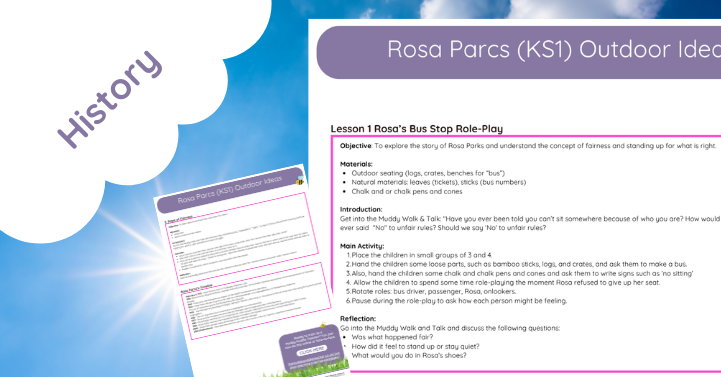

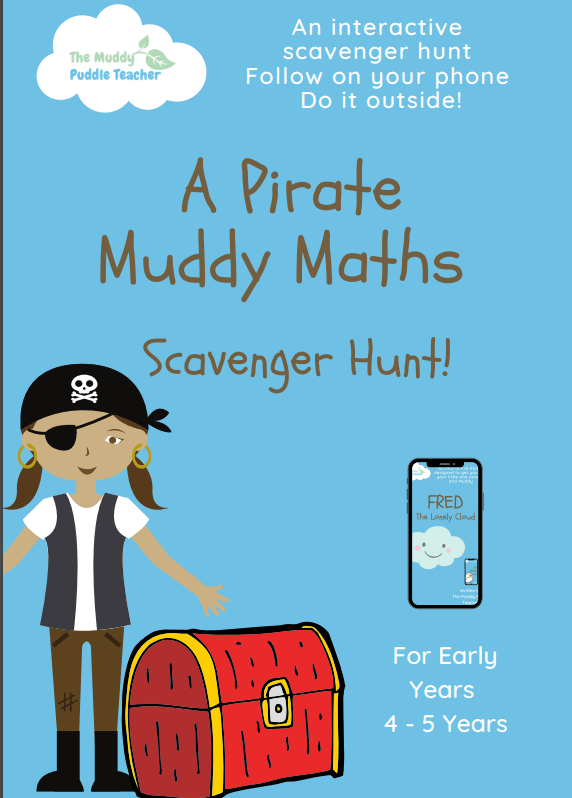
Make number learning active, meaningful and memorable with this Outdoor Maths Scavenger Hunt for Numbers to 20.
This teacher-created outdoor EBook helps children recognise, count, find and explore numbers from 1 to 20 through movement and play. Instead of completing another number worksheet, children head outside to search, collect, count, match and talk about numbers in a real environment.
The scavenger hunt is ideal for EYFS, Reception, Year 1, intervention groups, home education and children with SEND who benefit from practical and multi-sensory learning.
You do not need a woodland, specialist outdoor area or expensive equipment. The activity can be completed on a playground, grassy space, school field, garden or small outdoor area using simple resources already available in most settings.
Explore more active number teaching through our Outdoor Maths Activities, Early Years Outdoor Learning Hub and KS1 Outdoor Learning Resources.
Download all of our teacher-created outdoor resources with a 60-Day Free Trial.
What Is the Outdoor Maths Scavenger Hunt EBook?
The Outdoor Maths Scavenger Hunt is a practical maths resource designed to help children develop confidence with numbers to 20.
Children follow simple outdoor challenges that encourage them to find quantities, recognise numerals, count natural objects, compare groups and place numbers in order.
The activities turn early number learning into an experience children can see, touch and move through.
Children might collect 10 leaves, find 5 stones, build the number 12 using sticks, match a numeral to a quantity or search the playground for numbers displayed on signs, doors and equipment.
The focus is not on racing or getting every answer right immediately. It is about helping children notice numbers, use mathematical language and build confidence through practical experiences.
The resource can be used during a whole-class maths lesson, continuous provision, outdoor learning, a maths intervention, a nurture session or as an activity for parents to complete at home.
What Will Children Learn?
This outdoor maths scavenger hunt supports children as they learn to recognise numbers to 20, count objects accurately, match numerals to quantities, place numbers in order, identify one more and one less, compare groups and use mathematical vocabulary.
Children also develop communication, observation, problem-solving, teamwork and physical coordination.
Outdoor learning gives children opportunities to apply number knowledge in different ways. A child who struggles to identify 14 on a worksheet may recognise it more confidently after building it with sticks, jumping 14 times or collecting a group of 14 natural objects.
The learning remains mathematical, but the way children access it becomes more active and inclusive.
For additional support, visit our Outdoor Number Activities, Maths Activities Without Worksheets and SEND Outdoor Learning Hub.
Why Teach Numbers to 20 Outdoors?
Numbers can feel abstract when children only experience them as symbols printed on a page.
Outdoor learning makes number concepts more visible. Children can physically collect a quantity, move along a number line, create groups and compare amounts.
They begin to understand that the numeral 8 represents eight real objects, eight movements or eight sounds.
Movement can also support attention and memory. Children are more likely to remember a number challenge when they have searched for it, built it, jumped it or completed it with a friend.
Teaching numbers outdoors can support children who find desk-based tasks difficult, need regular movement, learn through sensory experiences or lack confidence in maths.
It can also reduce the pressure some children feel when maths is associated with written work and correction.
Outdoor maths is not separate from the curriculum. It is another way to teach the same essential knowledge and skills.
Numbers to 20 Scavenger Hunt Ideas
The EBook provides a clear structure for exploring numbers outdoors, but teachers can adapt the challenges to match the age and confidence of their children.
Children might find one feather, collect two sticks, touch three trees, make four chalk marks, find five stones or complete six jumps.
As the numbers increase, children can work with a partner to count carefully and check their total.
They might collect 12 leaves, arrange 15 stones in a line or find 20 small natural objects. Children can then group the objects into smaller sets to make counting easier.
The activity can also include number recognition. Place number cards around the outdoor area and ask children to find them in order, match each number with the correct quantity or stand beside the number that answers a question.
Keep the instructions short and give children enough time to count without feeling rushed.
Try This Tomorrow
Take number cards from 1 to 20 outside and place them around the playground.
Ask children to find one card at a time and create the matching quantity using natural or reusable objects.
A child who finds the number 7 could collect seven leaves, place seven cones in a row or draw seven chalk circles.
Once they have created the quantity, ask them to explain how they checked their answer.
This activity requires very little preparation and gives teachers a useful opportunity to observe which children recognise numerals, count accurately and understand that the final number counted represents the total.
Making Numbers with Natural Materials
Natural objects provide a simple way for children to explore the shape of numerals.
Children can use sticks, stones, leaves, petals or pieces of bark to build numbers from 1 to 20.
Building numerals encourages children to look closely at their formation. They need to consider whether a number contains straight lines, curved lines or a combination of both.
Children can make one large numeral together or create their own smaller versions.
Avoid expecting every numeral to look perfect. The discussion around how the number is formed is more valuable than producing a polished final result.
You might ask, “Where will you begin?”, “Does this number need a curved line?”, “Which number looks similar?” or “Can your partner recognise the number you have made?”
Counting Natural Objects Accurately
Counting objects outdoors can be more challenging than counting neat pictures on a page. Natural objects vary in size, shape and position.
This makes the activity particularly useful.
Encourage children to move each object as they count it, place objects into a line or group them into sets. This can help prevent children from counting the same item twice or missing an item.
Children working with larger numbers might group objects into fives or tens before counting the total.
Teachers can model one-to-one correspondence by touching or moving one object for each number spoken.
Remind children that the final number they say tells them how many objects are in the group altogether.
Ordering Numbers to 20
Number cards can be hidden around the outdoor area for children to find.
Once all the cards have been collected, children work together to place the numbers in order from 1 to 20.
The cards can be arranged on the ground, attached to a washing line or placed beside chalk marks.
Some children may need access to a number line for support. Others can be challenged to identify missing numbers or arrange the cards in reverse order.
You can also remove one or two cards and ask children to work out which numbers are missing.
This activity helps children understand the relationship between numbers rather than learning each numeral in isolation.
Exploring One More and One Less
Once children can recognise and order numbers to 20, the scavenger hunt can be extended to explore one more and one less.
Show children a number card and ask them to find the number that is one more.
For example, after finding 13, children look for 14.
You can also create a quantity using natural objects and ask children to add one more or take one away.
Keep the objects visible so children can see how the quantity changes.
Children can physically step forwards for one more and backwards for one less on an outdoor number line.
This makes the mathematical relationship easier to understand.
Comparing Numbers and Quantities
Create two groups of outdoor objects and ask children to compare them.
Children can decide which group has more, which has fewer or whether the groups are equal.
They can place the groups beside one another, arrange the objects into lines or match each object from one group with an object from the other.
Introduce vocabulary such as more than, fewer than, less than, equal to, greater and smaller at a level appropriate for the children.
Encourage children to explain how they know, rather than simply giving an answer.
Supporting Children with SEND
Outdoor maths can be highly supportive for children with SEND, but the activity should be adapted to each child’s needs.
Some children may find a full scavenger hunt overwhelming. Give them one number and one clear instruction at a time.
A child might begin by finding the number 3 and collecting three objects before moving to the next challenge.
Use visual number cards, symbols, objects of reference or a simple first-and-then board where needed.
Children who communicate non-verbally can match, point, collect, order or place objects beside a numeral.
Children who find counting difficult may benefit from working with smaller numbers before progressing to 20.
Some children may prefer to complete the activity in a quieter part of the outdoor space or with a familiar adult.
The aim is not for every child to complete the scavenger hunt in exactly the same way. The aim is for every child to experience success with number.
Explore our Dyscalculia Maths Resources, Outdoor Learning for Autistic Children and Sensory Outdoor Activities for more inclusive ideas.
Who Is This Outdoor Maths EBook For?
The Outdoor Maths Scavenger Hunt is suitable for EYFS practitioners, Reception teachers, Year 1 teachers, teaching assistants, maths intervention staff, SENDCos, childminders, home educators, parents and special-school teams.
It can be used with a whole class, a small group or an individual child.
Teachers can repeat the activity throughout the year, changing the number range or level of challenge as children’s confidence grows.
Younger children may focus on numbers to 5 or 10. More confident learners can work with all numbers to 20, explore missing numbers, compare quantities or solve simple addition and subtraction problems.
What Equipment Do You Need?
The activity has been designed to require very little equipment.
Teachers may choose to use printed number cards, chalk, cones, hoops, buckets, clipboards or a simple collection tray.
Children can also use objects already available outdoors, including leaves, sticks, stones, petals and seed pods.
Check natural objects before use and follow your setting’s usual outdoor safety procedures.
Children should be encouraged to collect responsibly and avoid picking living plants unnecessarily.
Ready-to-Use Outdoor Maths Resources
The Muddy Puddle Teacher® helps teachers take curriculum learning outside without creating extra workload or relying on expensive equipment.
Our growing library includes early number activities, outdoor maths games, scavenger hunts, times-table challenges, shape activities, measurement lessons and practical SEND support.
You can access the complete resource collection through our 60-Day Free Trial.
Join our Free Weekly Outdoor Learning Magazine for seasonal ideas, practical lesson inspiration, outdoor learning news and resources for EYFS, KS1, KS2 and SEND.
Download the Outdoor Maths Scavenger Hunt EBook
The Outdoor EBook Scavenger Hunt: Maths Numbers to 20 offers a playful and practical way to develop early number confidence.
Children can recognise numerals, count quantities, order numbers and use mathematical vocabulary while moving, searching and learning outdoors.
It is simple to prepare, easy to adapt and suitable for a wide range of children and outdoor spaces.
Download the Outdoor Maths Scavenger Hunt and start exploring numbers to 20 outside.
Frequently Asked Questions
What age is the numbers to 20 scavenger hunt suitable for?
The resource is ideal for Reception and Year 1 children. It can also be adapted for nursery-aged children, older pupils requiring additional maths support and children with SEND.
Can I use the scavenger hunt with numbers to 10?
Yes. Select only the numbers that match the children’s current stage of learning. Children can begin with numbers to 5 or 10 before progressing to 20.
Does this outdoor maths activity need lots of equipment?
No. You can complete it using number cards and objects found around the playground or outdoor area. Chalk, cones, hoops and natural materials can also be used.
Can the resource support children with SEND?
Yes. Reduce the number range, use visual prompts, present one instruction at a time and allow children to demonstrate their understanding by pointing, matching, moving or collecting.
What maths skills does the scavenger hunt develop?
The activity supports numeral recognition, accurate counting, one-to-one correspondence, number ordering, comparing quantities, one more, one less and mathematical language.
Can parents use the EBook at home?
Yes. The challenges can be completed in a garden, park, playground or during a walk using simple objects and number prompts.
Written by Sarah Seaman PGCE MA
Founder of The Muddy Puddle Teacher®
Teacher for over 19 years
Bloomsbury author
Trainer of thousands of teachers across the UK